Aging Well with Dr. Dan Blazer, Part 2: Successful Aging @TheHighCalling

Aging Well

In his 2002 book, Depression in Late Life, Laity Leadership Institute Senior Fellow Dan Blazer, M.D. retells a story from the life of Siddhārtha, who would come to be known as the Supreme Buddha. The young prince left his palace one day and came across a “tottering, wrinkled, white-haired, decrepit old man who was bent over, trembling, and mumbling something incomprensible while he tottered along, balanced by a stick he used for a cane.” Seeing this sight, Siddhārtha is said have told his chariot driver, “It’s the world’s pity, that weak and ignorant beings, drunk with the vanity of youth, do not behold old age. Let us hurry back to the palace. What is the use of pleasures in life, since I myself am the future dwelling-place of old age?”

The perception of old age as a depressing season of life, however, is not confirmed in scientific studies of the elderly, Blazer concluded. …

Read the whole article at The High Calling.

Aging Well with Dr. Dan Blazer, Part 1 @TheHighCalling

Aging WellLaity Leadership Institute senior fellow Dan Blazer, M.D., PhD. describes himself as a “prototypical academic psychiatrist,” but the path to his specialty in geriatric psychiatry was anything but typical.

Blazer spent two years as a young medical missionary in Cameroun and Nigeria, where he ran a mobile clinic in remote villages. He was impressed by the good mental health of the elderly he encountered among the 150-200 patients he treated every day.

“If a person survived into late life relatively healthy, they did exceptionally well, so I was curious what it was about being in that society that permitted these older people to do as well as they did,” said Blazer.

When he arrived at Duke University in Durham, North Carolina, to begin his psychiatric residency, he discovered that Duke houses a national center for the study of aging.

“I immediately got involved with the aging center and basically have been doing geriatric psychiatry ever since. But I think the stimulus was the work in Africa where I saw these very healthy people aging,” he said. …

Read the whole article at The High Calling.

Integrating Faith &Psychiatry: A Summary

On the Way to Gettysburg 2

Psychiatry and faith offer complimentary insights into the human condition and can help us to lead healthier and more satisfying lives, we learned in our seven-part series with Laity Leadership Institute Senior Fellow, Allan Josephson, M.D. …

To read a summary of those posts, go to The High Calling.

Allan Josephson: Integrating Faith & Psychiatry, Part 6: Finding Balance Between Work & Family @TheHighCalling

On the Way to Gettysburg 2

The United States is known for its fast-paced, hard hitting business culture. Many careers demand 60 hour weeks or more if we’re going to succeed and provide for our families. Inherent in this climate is the temptation to worship at the altar of work.

Laity Leadership Institute Senior Fellow Allan Josephson,M.D. knows something about this, not only from treating psychiatric patients, but also from his own experience of juggling a challenging career with family commitments.

As a psychiatric resident, Josephson spent a week living with patients at the Hazelden Chemical Dependency Center in Minnesota. Twelve-step meetings at the center began with introductory statements like “I am an alcoholic” and “I am a drug dependent” and he didn’t battle these addictions, so he introduced himself by saying, “I am Allan Josephson, I am a workaholic.”

He recounted this story in a lecture he gave upon receiving the Oates Award from the Wayne Oates Institute. Oates, an accomplished therapist and theologian, coined the term workaholic.

“He recognized that how we approach work can have an addictive quality to it and have the same effect in our interpersonal relationships and our health,” said Josephson. “Doing things of substance requires so much of us. There are trade offs and as long as you keep your values in front of you, that’s all you can do sometimes.”

As a child and adolescent psychiatrist, Josephson has seen a lot of families broken by disordered priorities. He offers the following suggestions for finding a healthy balance. …

Read the whole article at The High Calling.

Allan Josephson: Integrating Faith & Psychiatry, Part 5: Narcissism & Relationships @TheHighCalling

On the Way to Gettysburg 2

Dealing with the narcissists in our lives is never easy, but there is hope for improving these difficult relationships, says Laity Leadership Institute Senior Fellow AllanJosephson, M.D.

Narcissism develops out of early relationships and is sustained by subsequent ones, so it’s important to nip the problem in the bud. How one does that depends on the nature of the relationship. In this article, we’ll deal with three kinds of relationships: parent/child, husband/wife, and employer/employee. …

You can read more about  narcissism and relationships at The High Calling.

Photojournalism by Explorations Media, L.L.C.

I’ve recently created what I think are some compelling photo sets on Flickr. As a journalist, I prefer realism to photo-shopped images, though artistic renderings can sometimes reveal truth better than fact. I recommend viewing these sets as slideshows, as I’ve arranged each one to tell a story.

Seaside Heights Italian Festival & Columbus Day Parade

Laity Lodge 2011 Writers Retreat

Blue Hole Laity Lodge

Movement Day

Movement Day at Fifth Ave. Presbyterian Church, NYC

New York City Premiere of Machine Gun Preacher

Michelle Monaghan-and-Gerard-Butler

9/11 Tenth Anniversary Memorials

10th-anniversary-of-9.11-18

Jesus, Bombs, & Ice Cream by M.W. Scheller

Jesus,-Bombs,-Ice-Cream-18

Hurricane Irene

Telumundo reporter and others at Pt.-Pleasant-Bch-Boardwalk, 8/27/11

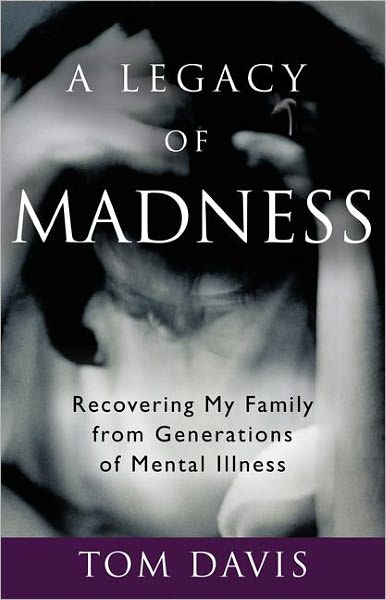
Tom Davis: ‘A Legacy of Madness’ @NJShorePatch

Jersey Shore Patch Regional Editor Tom Davis, a Point Pleasant Boro native who is appearing at a Manasquan bookstore, talks about recovering himself and his family from generations of mental illness.

Tom Davis is not only regional editor of Jersey Shore Patch and an adjunct professor of journalism at Rutgers University, he is author of the poignant new memoir, A Legacy of Madness: Recovering My Family from Generations of Mental Illness.

Davis, a Point Boro native, was a recipient of a Rosylnn Carter Fellowship for Mental Health Journalism and received a ringing endorsement for the book from the former First Lady.

“A Legacy of Madness breaks down the barriers of silence that shroud mental illnesses within families for generations,” Carter wrote. “By sharing the story of his family history and his own personal journey, Tom Davis provides hope and inspiration to others.”

Tom Davis will be signing copies of Legacy of Madness at 7 p.m., Friday, October 6 at Booktowne, 171 Main Street in Manasquan, and at 11 a.m., Sunday, October 9 at Barnes & Noble at Brick Plaza in Brick.

I sat down with Davis for a forthright interview about what it was like to grow up with his mother’s undiagnosed mental illness and what he did to change the course of history in his family. The interview has been edited for length and clarity.

To read the interview, go to Manasquan Patch.

Allan Josephson: Integrating Faith & Psychiatry, Part 4: Work & the Self @TheHighCalling

On the Way to Gettysburg 2

Eric had leadership written all over him. Intelligence, good looks, and interpersonal drive had led to an MBA at a major university. When his first business venture failed, he was on to another that succeeded. Several other business successes followed, as did personal leadership projects undertaken at church and in his community.

He was politically active both locally and nationally. His wife and children were also achievers,  but a sense of balance was missing from his life.. He suffered two major depressions in his adult life and another as retirement age approached and he was confronted with financial difficulties and the interpersonal consequences of chronic over-extension. His retirement was forced and he was emotionally adrift.

Disordered Thinking 
“The driver for many who lack balance in their lives is disordered thinking about the relationship of work to self and God,” Laity Leadership Institute Senior Fellow Allan Josephson, M.D. says.

Although he recognizes that striving for a balance between personal and professional domains facilitates development in both, Josephson has something else in mind when he considers this kind of disordered thinking. …

Read the whole article at The High Calling.

Integrating Faith & Psychiatry, Part 3: Narcissism @TheHighCalling

On the Way to Gettysburg 2

It goes without saying that narcissists have an inflated view of themselves, one that frequently masks a hidden sense of emptiness and inferiority. What’s not so obvious, according to Laity Leadership Senior Fellow Allan Josephson, M.D., is that those who are in relationship with a narcissist “by definition become depleted or depressed, because life always has to reflect the grandeur, the beauty, the intelligence of the narcissist.”

The key hallmark of narcissism is a lack of empathy, Josephson said. Empathy is when you put yourself in someone else’s shoes as much as is humanly possible and try to understand what their world is like. Good parents empathize with their children, and spouses in healthy marriages empathize with each other.

“Narcissists can’t do it. It’s like they have a mirror in front of their face.  At this extreme, the narcissist’s view is all that matters. ‘It’s all about them,’” he said.

Predictably, relationships for narcissists, both personal and professional, tend to be short lived. …

Read the whole article at The High Calling.

Integrating Faith & Psychiatry, Part 2: Scriptural Principles for Growing Healthy Children @TheHighCalling

On the Way to Gettysburg 2

Parenting is hard, and not just because we struggle to balance work and family. The stakes are high. We parents all raise our children, hoping they will become spiritually, emotionally, psychologically, and physically healthy adults. We look for answers from pastors, pediatricians, and parenting “experts,” but we should not neglect the wisdom of mental health professionals.

Healthy child development reflects God’s character and purposes, says Laity Leadership Senior Fellow Allan Josephson, M.D., and Scripture provides guidelines that children desperately need.

In his 1994 paper, “A Clinical Theology of the Developmental Process: A Child Psychologist’s Perspective,” Josephson outlines eight areas of child development that not only illustrate his theology, but also offer sound parenting principles.

To learn more about these principles, go to The High Calling.

Allan Josephson: Integrating Faith & Psychiatry, Part 1 @TheHighCalling

On the Way to Gettysburg 2

When Laity Leadership Institute Senior Fellow Allan Josephson, M.D. decided to study psychiatry 30 years ago, persons of faith often wondered how he would fare as a Christian in the field. The influence of Sigmund Freud’s atheism has waned, Josephson said, but it was pervasive then.

Josephson not only survived, but flourished and became an agent of change. Today, he is Vice Chairman for Child & Adolescent Psychiatry Services at the University of Louiseville School of Medicine in Louiseville, Kentucky, and author of three books. One of them is the Handbook of Spirituality and Worldview in Clinical Practice, a text he edited and contributed to that is used in psychiatric residency programs to help psychiatrists understand the diagnostic and therapeutic implications of their own and their patients’ worldviews. …

In this series we’re going to tap into Josephson’s wisdom to explore this theme as it relates to:

  • How healthy child development mirrors Scriptural principles.
  • What children need in the contemporary family for healthy development.
  • Why there is an increase in people, particularly children and adolescents, who exhibit narcissistic behavior, and what can be done about it.
  • The psychological effects of technology.
  • How work defines the self.

Both psychology and theology have much to say about these topics. We hope you’ll join us for the discussion.

You can read more about Dr. Josephson’s journey at The High Calling.

Rationing and the NICU: An Interview with Catholic Ethicist Charles C. Camosy @TheHuffingtonPost

We’re already rationing health care, Fordham University ethicist Charles C. Camosy argues in his book Too Expensive to Treat? Finitude, Tragedy, and the Neonatal ICU, so why not reconsider the resources expended on premature babies?

Camosy was a principal organizer of Open Hearts, Open Minds, and Fair Minded Words: A Conference on Life and Choice in the Abortion Debate at Princeton University last year and is working on a book about correlations between Christian Ethics and the controversial bioethics of philospher Peter Singer. I interviewed Camosy via email about his current book and its foundation in Catholic Moral Theology and the Social Quality of Life model of bioethics.

Christine A. Scheller: You say in the introduction that “Too Expensive to Treat?” is about “moral tragedy” that results from “two universal aspects of the human condition”: 1. We have virtually unlimited health care needs 2. We have limited health care resources. You suggest that while we must live with this tragedy, “we need not live in an unjust situation.” Why did you choose to focus on Neonatal Intensive Care as an example of this injustice?

Charles C. Camosy: My general argument could really apply to any kind of medicine. Many other bioethicists have explored rationing health care at the end of life, but I wanted to apply this argument in a new way. I also picked this topic because the very few who have looked at rationing care for newborns, like the philosopher Peter Singer, have challenged the moral worth of such babies. I insist on the full worth and personhood of even the most vulnerable newborn baby. No one should aim at the death of a patient in order to save money.

You argue that the most important issues of neonatal bioethics are primarily social, so the “social quality of life model” is the most helpful for decision making in the NICU context. What is the social quality of life model and why is it the most helpful?

Despite the secular culture’s continued attempts to get us to worship the individual and “individual rights,” Christian ethics affirms that no human choice exists in pure isolation. It is impossible to understand one person’s claims except in a context of relationships with other persons. If we are going to ask whether and how to treat an individual patient, then we cannot pretend to do so in an isolated manner — as if choices made about one patient do not affect other patients and our broader society.

You say “honest acknowledgement of the inescapable need to ration resources” and “rationing that has justice and the common good — rather than politics and the ability to pay — as its guiding principles” are two steps that should be taken in health care reform. How do you propose accomplishing these goals?

It is easy to point out that we are rationing resources already within Medicaid, Medicare, and even private insurance: certain necessary procedures and drugs are not covered, and almost nothing is paid in full. It is easy to point out that the way we currently ration care is unjust: politics and profitability drive most of it. But it is far more difficult to determine what to do instead. One thing we could do is give far more critical and public attention to the entities that are currently rationing care. What sort of people are making these decisions and how are they chosen? What is their training? Are they protecting vulnerable minorities over and against patients that might be big money-makers? How influenced are they by special interests and politics? I find it stunning that these practices still get very little attention even in our era of health care reform.

You say a broadly Roman Catholic understanding for reform according to the National Conference of U.S. Catholic Bishops would require: universal access to health care, priority concern for the poor, comprehensive benefits, pluralism, quality, cost containment and controls, and equitable financing. How does Catholic moral theology inform this list?

All people must have access to resources for meeting their basic needs, and the community is unjust when they are not made available. Indeed, the Church fathers and other great theologians like Thomas Aquinas teach that the poor and vulnerable may actually take what they need from others without it being “theft” because what they are owed to is being unjustly withheld. The bishops, therefore, start with the premise that all human beings are owed health care as necessary for their basic needs. Following in the example of Jesus, we must then have a special concern for the poor and given priority to their health care needs over those who are better off. The other aspects listed are a bit more complex and may even be in tension with each other. Yes, we should aim for comprehensive benefits, but that might be balanced by needs for quality and cost containment. The Catholic tradition takes a both/and approach to these and many other questions — believing that we must live with the tension rather than abandoning important values.

You write in the conclusion: “Perhaps forgoing lifesaving treatment for babies in the NICU will be enough to give our culture the shock it needs to clear the conceptual space needed for this kind of systematic shift in thinking about health care?” Do you think any parent would be willing to make this tradeoff?

I would be shocked. It would take a selflessness and mental strength that is close to superhuman. However, many parents are already familiar with Medicaid and private insurance denying claims for health care for their children. Again, we are already rationing health care for our children (and other patients), and I’m simply arguing that we should be honest about this and that we should try to do it justly.

In a post about the debt ceiling debate at Catholic Moral Theology, you wrote: “Christians in particular should understand that the finitude of our natures and of our resources means that rationing health care is an inescapable feature of human existence,” but research has shown that Christians often cling to artificial life extension as tenaciously, if not more tenaciously than others. What can be done about this disconnect between what Christians should understand and what they do?

Anyone gazing at a crucifix can see that preserving biological life at all costs is a failure not only to follow the example of Jesus, but of the early Christian martyrs as well. Following the commands of God to do justice to the most vulnerable, especially when it means meeting their basic health care needs, trumps whatever good can come from pumping huge amounts of money into an attempt to prolong the fate that awaits us all. Unfortunately, many self-described Christians have traded our tradition of justice for the most vulnerable and a belief in the kingdom of God for an understanding of secular individual rights which can envision no life but this one. But no one can serve two masters, and modern-day Christians should think hard about to what or whom they own their ultimate allegiance.

Here’s the article at  HuffPost.