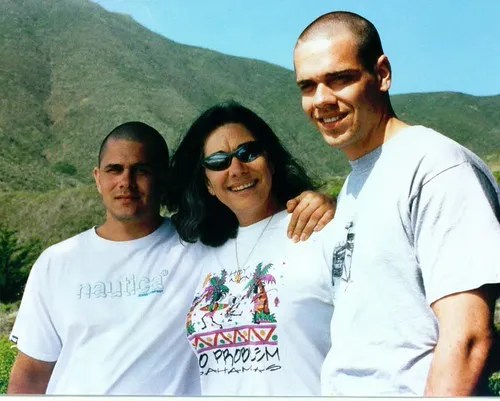
When Tragedies Are too Big to Absorb, How Do We Find and Give Comfort? @TheHuffingtonPost

I wonder if any of us is really capable of handling the scope of sorrow that technology now exposes us to.

On Friday, as the world was rightly absorbed with the epic tragedy in Japan, I was reporting on a local tragedy for Patch.com. A young man, Matthew C. Blum, 32, of Forked River, New Jersey, had collapsed and died after leaving a recreational hockey game because he didn’t feel well.

Blum was married just four months ago and his wife learned two weeks ago that she is expecting their first baby. A season of celebration was inexplicably shattered for this family.

As I sat next to Blum’s young, pregnant widow in the living room of her in-laws’ house absorbing one family’s grief, I was incapable of absorbing anything more epic than that.

I felt this way after the Haiti earthquake last year, only the reason was more personal. Still mourning the death of my son in 2008, I was incapable of taking in any more sorrow. My personal grief has, to some degree, emotionally disconnected me from global tragedies.

I wonder though if any of us is really capable of handling the scope of sorrow that technology now exposes us to. Famine, earthquake, tsunami, terrorism, genocide: it’s enough to tempt one to believe end times prophets have a point. …

Read the rest here.

Finding Comfort Where None Is To Be Found @TheHuffingtonPost

I was asked to write something about spiritual comfort after shocking sudden death for the HuffPost Religion channel, and only had a few hours to do it. Here’s what I came up with:

It took me all weekend to get used to hearing the name Gabrielle Giffords reported in the tragic context of the Tuscon shootings. Not only was the event horrific, but I also couldn’t shake the similarity of the congresswoman’s name to that of my late son Gabriel Gifford Scheller. The endless stream of news triggered a wave of memories from when police showed up at my door in the early morning hours of March 29, 2008 to report that Gabriel had killed himself. The horror of an event like that is so vast that unless you have lived through one like it, you can’t truly comprehend it. One moment, life is mundane, ordinary, perhaps even joyful. The next, it is torn to shreds so completely that you believe with every ounce of your being that it is over. At least I did.

And I was right, in a sense. Everything I thought I believed was called into question and everyone I thought I trusted was placed into one of two categories: safe or unsafe. Safe people didn’t say much and if they did, they most certainly did not speak in spiritual platitudes or pronounce judgment on the situation or on my son. Unsafe people did and do pretend to understand, minimize the horror or its impact, express some perverse need to identify with it, or otherwise just creep me out.

My husband had absolute peace that Gabriel was with God, but he really struggled with flashback images of how Gabe killed himself. I didn’t wrestle as much with our son’s final moments as I did with where he is now and why he did what he did. A friend who is a psychiatrist counseled me early on to give up the second battle because, he declared, “Suicide is inherently an irrational act; it will never make sense.” (Likewise, random acts of public violence.) A Lutheran pastor comforted me by saying that how we die doesn’t determine where we spend eternity.

Over the past couple days, I have heard the tragedy in Tuscon blamed on irresponsible political rhetoric and mental illness, neither of which provide satisfactory answers. In situations like these, we long for some kind of solace, for someone to tell us we and our loved ones are safe. In D. Michael Lindsay’s book Faith in the Halls of Power, former George W. Bush speechwriter Michael Gerson is quoted as saying, “When people are presented with entirely unfair and unreasonable suffering, the president of the United States has to assure them … that the universe has meaning, and that the universe is not an emptying, echoing void.” Gerson goes on to say that complaints about politicians’ use of religious rhetoric don’t often emerge in the context of public tragedy. Thus we waited for our president to speak.

We don’t want just anyone to tell us that everything will be okay both in this life and in the next; we want someone with authority to say it. My husband, a former pastor and longtime Bible teacher, was too paralyzed with grief and shock to attend to the practical details of our son’s funeral, but he was able to get up and spontaneously preach a mini-sermon that comforted many, including me. I couldn’t access my faith, but I was able to take comfort in his. Conversely, as he struggled with those terrible mental images, I shared with him something that had helped me when I kept mentally replaying the final moments of friends who had died in the terrorist attacks on Sept. 11, 2001. I realized one day as I was praying that they had only lived through the horror of Flight 93 crashing to the ground for an instant and then it was over. The same was true for Gabe’s final moments.

An old friend also sent me a note encouraging me to take solace in beauty wherever I could find it. As I took her advice, the beauty around me ministered to me and reminded me, as Gerson suggests, that order coexists with chaos. The universe is not an emptying, echoing void. A glorious California sunset would break through the kitchen window as tears flowed over the dishes I tried to do. The bougainvillea came into bloom despite my grief. My other son, who had been suffering from clinical depression for five years, finally received a correct diagnosis and the help he needed. We moved home to New Jersey and to the warm embrace of the family and friends we had missed so much when we lived out west.

There was good to be found, but none of it made up for, or brought meaning to the loss. It co-existed (co-exists) with it. Violence, whether it be self-inflicted or directed outward, teaches us that ours is an undeniably broken world. Yet even in this horrible moment when one young man walked into a crowd and shattered the lives of so many, another ran toward the bullets to provide triage to his wounded boss and to others around her. Three people conspired to stop the gunman as he struggled with his weapon. In a split second everything changed again. For him, for the people present, for their families, for his family, for the Congress, and for us. As we haggle and fight over what happened and about what needs to be done in light of it, may we not forget the sustaining beauty that exists in every moment we are privileged to live on this earth. Even the dark ones.

Check out what HuffPost readers are saying here.

The Abortion Debate: Open Hearts, Open Minds and Tragedy as a Fair Minded Word @TheHuffingtonPost

Fordam University bioethicist Charles Camosy introduced Open Hearts, Open Minds and Fair Minded Words: A Conference on Life and Choice in the Abortion Debate at Princeton University on October 15, 2010 by saying that it wasn’t the conference any of its organizers wanted or envisioned. Instead many compromises were made between him and his colleagues Peter Singer (Princeton), Frances Kissling (University of Pennsylvania) and Jennifer Miller (Bioethics International) as they thought about how to find common ground amidst the debate.

In his introduction, Camosy, who is pro-life, outlined three goals: 1. better map disagreements; 2. find common ground across divides; 3. have open hearts and open minds. Kissling, who is pro-choice, compared her pre-event anxiety to preparing for a wedding that both families believe is a horrible mistake. (Perhaps such fears were eased as the conference unfolded because there were security guards at the doors on the first day but not the second.)

After the conference, Camosy described it as largely successful in meeting these goals despite pockets of incivility, while Evangelical participant David Gushee (MacAfee School of Theology, Mercer University) described it as an audacious attempt that largely failed to find common ground.

Gushee was on the first panel, “Bridging the Abortion Divide: Recurring Challenges, Emerging Opportunities,” with his Common Ground colleague Rachel Laser, Mary Jacksteit of the Public Conversations Project (which initially attempted to bridge the abortion divide in the 1990s) and both Kissling and Miller. While I learned a lot from each discussion, theirs was the only one I attended that didn’t devolve into a remix of worn-out debates. Perhaps this is because all five speakers were already committed to the goal of exploring shared values.

Laser (who is pro-choice) and Gushee (who is pro-life) became friends through their work on an abortion governing document that was submitted to President Obama’s transition team. They described themselves as comrades in arms who bonded as they fended off friendly fire from their respective sides.

In his opening remarks, Gushee described abortion as a tragedy. Kissling objected to this definition. She said the moral right of women to make decisions about reproduction is essential for them to be recognized as human beings and while she respects the “category of fetal life,” she doesn’t “have a sense of individual fetuses as possessing high value.” Even so, she’s troubled by what she sees as a coarsening of discourse over the issue.

Gushee’s use of the term tragedy initially struck me as emotionally loaded too. I did not choose abortion when I had an unplanned pregnancy, but several members of my social circle did in similar circumstances and only one of them seems to have experienced it as a tragedy. The rest have occasionally communicated feelings of guilt about their abortions, but not regret.

I have written for Christianity Today from a strongly pro-life perspective and yet I’m not sure I ever thought of abortion as tragedy either. Instead, I’ve thought of it and continue to think of it as morally wrong. When I think of tragedy now-a-days, I tend to think of my son Gabriel’s suicide. The issues are related in that he didn’t have the right to take his own life any more than I had the right to take it and yet they are different because he was mentally impaired by Depression when he did so. (Despite notions to the contrary, the American Foundation for Suicide Prevention says suicide is overwhelmingly a function of mental illness rather than free will.)

Because Gabriel’s death left his brother with no siblings in this world, I’ve become increasingly grateful for his cousins, several of whom were conceived outside of marriage and whose biological parents either never married or married and later divorced. That is a different kind of heartbreak, and yet all these young people are flourishing as are our bonds with one another despite the complications and pain common to all blended and broken families.

My gratitude for them has gotten me thinking about those other children who are missing from my social network because of abortion. I experience Gabriel’s death as tragic because I had the opportunity to know and love him, while I experience those children as mere absences because I never got the chance to know them. I’ve subjectified them as thoroughly as Kissling has.

This is an oft-cited problem with discussions about abortion that pit the life of the unborn child against the welfare of the mother. Women can speak for themselves while unborn children can’t and we are incapable of fully comprehending what we are missing, even if we can glimpse it from the joy other children bring us.

I talked to Gushee about his use of the word tragedy. He said it may not have been the most philosophically precise description, but he was trying to communicate that abortion reflects a deep brokenness in the human condition. This sounds exactly right.

When I think about how tragic my son’s death is, I’m reminded that I would much rather live with the anguish it causes me than envision a life in which I never knew him. Abortion is a tragedy in and of itself, regardless of whether or not we as individuals or we as a society feel that it is so.

1 Corinthians 13:12 says we see things imperfectly in our finite understanding, but one day we will see with perfect clarity. Only then will our perception of abortion match reality.

Check out reader reaction to this reflection at The Huffington Post.

Flashes of Light in the Darkest Depths: The Faith and Life of Blind Photographer Pete Eckert @TheHuffingtonPost

Pete Eckert is a unique artist featured in the documentary Dark Light: The Art of Blind Photographers. I reviewed the film earlier this year and talked to Eckert afterward about his spiritual and artistic journey. Here’s our conversation, edited for space:

Christine A. Scheller: As you know, I was exposed to your work through the documentary Dark Light, which is about blind photographers. Do you have any vision at all?

Pete Eckert: No. I have some light perception, but I also have phantom things that go on like crackling lightning and spirals. Somebody comes up and makes a loud noise; I get a big burst of white light come across my vision.

Christine A. Scheller: Do doctors have an explanation for that or is it just something going on in your brain responding to the noise?

Pete Eckert: The last 25 years or so, I’ve been actively rewiring the optic cortex. And so, it doesn’t surprise me when a sound will generate a visual effect. Somebody comes up and I don’t hear them and they grab hold of my shoulder, or if there’s a loud noise, I get this burst of light. That’s, I think, direct evidence that there’s a cross-over between sound, touch and vision.

Christine A. Scheller: What condition caused you to lose your sight?

Pete Eckert: I have Retinitis Pigmentosa (RT). My life is divided very neatly into two sides. I started to go blind when I was 27 or so. I had 210 degrees of vision. I dropped down to 90 degrees within just a couple of months. But I had 10 years of some central vision. I was legally blind, but I was a foreman of a construction crew at that time. I could shoot at the top of National Rifle Association pistol competitions. I made a lot of use of my central vision.

Christine A. Scheller: Was that a terrifying experience to go through?

Pete Eckert: It’s very emotional. RP is very cruel. You adapt and then some more vision gets taken. You adapt again and some more vision gets taken. Depending on how long it takes for you to drop down into complete blindness, you’re always suffering a loss. It’s as if you are watching yourself die.

Christine A. Scheller: What sustained you through that continual sense of loss?

Pete Eckert: That’s hard to say. I refused to accept blindness. I always pushed out into the world. When I got my first guide dog, we had some mishaps. I almost got run over by a train. A number of cars almost hit us. It was very difficult to adapt. Finally, at one point, I just decided my independence and freedom [are things] I’m willing to die for.

Christine A. Scheller: Did your Christian faith help you deal with the losses?

Pete Eckert: Perhaps, perhaps. I’m not really sure. I could see that something was taken, but something was given. You could call that faith. … I base my life on the Ten Commandments. But then, also on the tenets of Tae Kwon Do: Courtesy, integrity, perseverance, self control, and indomitable spirit. The tenets that I just rang off there, they’re just reflections of the Ten Commandments. A lot of them, if you thought about it, they fit together. A lot of Christians, they forget to be courteous. And then, when you run into trouble, you don’t give up–you know the indomitable spirit.

Christine Scheller: You were a visual artist before you went blind. At what point did you begin doing photography?

Pete Eckert: After I was totally blind.

Christine Scheller: How did that come about?

Pete Eckert: I was looking through a drawer and I came across my mother-in-law’s old camera. … I like mechanical things. I was fooling with it and my wife came home. I had her explain what all the settings were. There was an infrared setting on it. …I have a corny sense of humor. A blind guy doing photos in a non-visible wavelength, that just cracked me up!

Christine A. Scheller: Your process and your photos are so meticulous and ordered that it’s obvious you have a particular vision in mind. Tell me about that.

Pete Eckert: Vision is a slow process. Babies, when they are learning to see, don’t fully comprehend what their eyes are bringing to them. Sighted people, if they’re sick or preoccupied, are not getting all the data from what they’re seeing. So getting vision from sound is like low resolution detail. As I sit in the room I’m in right now, I can hear the clock going off. The sound’s bouncing off the walls; I can tell exactly where my dog is; hear the arms on the couch. Sound paints an image. It does give you the details of your surroundings.

Christine A. Scheller: Did you research sound or you just figured this all out from your own experience?

Pete Eckert: From my own experience. Now there are fancy studies on how the brain works and how blind people can do this and that. It’s pretty much documented. I was just going by the fear of blindness on my own. Once I realized and I was so quickly able to adapt, I figured, “I know I’m going to go blind; I don’t want to go blind; how can I provide a mind’s eye image?”
When I walk upstairs now, I don’t count the stairs; I listen. When I get to the landing at the top, I hear the opening. I used to teach martial arts. Learning to spar at full speed is a very good test of how fast can you change the sound into an image, because if you don’t do it fast enough, you’re going to get tagged.

Christine A. Scheller: How do you know if your work turns out the way you’d like it to?

Pete Eckert: Think of the process broken into two sides: The event and the product. As I build the image–it’s in my mind’s eye–so I know when to stop. I know what I’ve done by sound and touch. I know where I was and where everything is. I develop the film. I take the picture. I do the contact sheets. Then I get some feedback. It could have a technical problem, say, I left the lens cap on and there’s nothing there and if I brought it to the lab and said, “I want this to be two feet by two feet.” I’d be throwing money away. So, this is economics. I listen to a description and match it up with my memory–and so, did I get what I intended to get?

Christine A. Scheller: So you’re matching that feedback to the image you have in your mind and that you want to project.

Pete Eckert: Right. I’m looking for confirmation. I let the people talk–it’s a gift that they’re giving me. Feedback is a gift. Communication is a gift. And so, I let them speak as much as they want. Some people go like, “Oh, this is really scary. I wouldn’t want this in my house.” Even a negative response I think of as a gift…. I’ve got a whole bunch of work that never has been printed. People either like [my work] or they really don’t.

Christine A. Scheller: The images I saw are really fascinating. One is called “Stations” and the other is “Cathedral.” Were they made while church services were going on?

Pete Eckert: “Stations” was not. There were a few people in the church, but they weren’t in the photo. “Cathedral” was done during Christmas Mass. There was a whole lot of work that went into that. I did a film test to figure out how much light was needed. Everything that I could touch, as far as my hands would go, I touched. I memorized the layout of the church. I know the sequence of a Mass. I know when what happens. …

The parishioners weren’t too pleased that I was setting up to shoot and I knew they wouldn’t be. I wore my best clothes–coat and tie. I washed the dog. (I had a beautiful black German shepherd then.) I also had the knowledge that Father Anthony was a friend of mine and he supports what I do.

A few parishioners came, and they said, “You can’t do this.” And I said, “Yeah, I did it last year,” which was true. And they went away. Then they came back and said, “You can’t use a flash in here.” I said, “No problem, I never use a flash.” They went away. And then, they said, “Do you have permission to do this?” And I said, “Yes, from above.”

If you think about it, the Franciscan Church–its mission is to help the poor and disenfranchised. A blind person who has learned a method to see, who is more disenfranchised than that? Who should they support? They went to [Father Anthony] and I think he just said, “Leave Pete alone.” When Communion came up, Father Anthony came [off] the altar. He came to my wife and I, served us Communion, and then went back up and served the rest [of the] probably 800 people there.

Christine A. Scheller: That sends a message of affirmation.

Pete Eckert: Exactly. He was teaching the parish.

Christine A. Scheller: What were you trying to communicate?

Pete Eckert: The Spirit in a church. I had tried to find a way to show the Holy Spirit. It’s very elusive. And so, this isn’t a direct attempt for the Holy Spirit, but it’s a direct attempt to show spiritual feeling in the church.

Christine A. Scheller: And the “Stations” image–what were you going for there?2010-10-09-STATIONS.jpg

Pete Eckert: This is a little bit more controversial. If you look at the guy’s feet, he’s wearing duck boots. The Catholic Church is having a lot of problems right now. There is a lot of controversy. The duck boots are for walking through the muck and mire of controversy. Remember I have a corny sense of humor!

Christine A. Scheller: Yeah. Now, I have to look at that again, because you really do! Are you Catholic?

Pete Eckert: I don’t know.

Christine A. Scheller: Were you raised Catholic?

Pete Eckert: Yes.

Christine A. Scheller: What are you working on right now?

Pete Eckert: I’m working on a series. It’s multiple exposures. What I’m doing is I’m showing the sighted world with people ghosting out and cars whizzing around, and then, in my studio, I’m dropping in these kind of wild figures…. I’m trying to show how it feels to be a blind person in the sighted world.

If you think about it, as I’m around people, I can hear them. I can place them. But, since I can’t see them, they could be spirits. They could be an apparition. … And so, some of the misinformation or misinterpreted information–I let that go into my photos. Even when I was sighted, if I was preoccupied or sad, I wasn’t getting the same data from my vision as I was if I was happy and very attentive.

One time I was at a crosswalk and the light changed and the guy standing behind me started yelling, “Go, go, go!” I wouldn’t move and he started to step out around me and stepped as if he was going to step into the street. I reached forward and grabbed his shoulder and yanked him back. A car whizzed in front of him, and he went, “Oh.” And, he didn’t thank me for saving his life or anything.

Christine A. Scheller: Well, I want to thank you for inviting me into your world and the fascinating world of blind photography. You have much to teach those of us whose sight is limited by our vision.

Check out reaction to this interview at The Huffington Post.

Domestic Abuse: Coming to a Church Near You @Her.meneutics

Sin by Silence Poster“How long am I to remain in this relationship?” This is the haunting question 65-year-old Glenda Crosley asks in the documentary, Sin by Silence, about the abusive husband she killed in 1986. She has been in prison for as long as she was married — 24 years — and wonders when her ordeal will be over.

In the film, shot almost entirely inside the California Institution for Women, Crosley says the first time her husband, Sam, “truly got physical” was when she was eight months pregnant with their second child. He shoved her into a wall. Eventually she came to believe that the violence wouldn’t end until one of them was dead. According to The Bakersfield Californian, at the time of Sam’s murder, the couple was separated and having an argument in a parking lot. When Sam walked away from her car to the trunk of his, she believed he was going to get the tire iron he had threatened her with the week before. She rammed him once, drove away, then turned her car and hit him again. He died at the scene.

Elizabeth Leonard, author of Convicted Survivors and professor at Vanguard University, a Christian college in Costa Mesa, California, says in the film that women who leave abusive relationships are often subject to “separation assault” and are 75 percent more likely to be murdered than before they left. So the answer to the question: Why didn’t she just leave? is not a simple one. …

Learn why not (and what you can do to help stop domestic violence) by reading the whole article here.

Pressing Past the Heartbreak @UrbanFaith.com & @HuffingtonPost.com

Dustin, Lynn Ann & Daniel Bogard

The photo above is of Lynn Ann Bogard and her two sons, Dustin (left) and Daniél (right). She and her husband Craig were kind enough to talk to me about how they are able to continue on in urban youth ministry after their sons’ deaths. The story begins like this:

Craig and Lynn Ann Bogard grew up in a small, predominantly white community in New Mexico but sensed a call to minister to African American youth in central New Jersey after a short-term mission trip to the area in the early 1970s. Thirty-five years later, despite living through periods of relying solely on God for their next meal, the Bogards are still at it. They have faced the kinds of challenges that only a deep and abiding faith could pull them through — fundraising struggles, misunderstandings about their motives by both blacks and whites, and, most recently, the untimely deaths of their two beloved sons, Daniél, 28, in 2004 and Dustin, 25, in 2007.

I’ve been aware of the Bogards’ Aslan Youth Ministries for many years, but only just met Craig Bogard last month. As I listened to this slight, serious man recount Aslan’s history, what I really wanted to know was: How do you keep ministering to other people’s children when your own were taken from you?

You’ll find the answer to that question and a whole lot more here, and here, at The Huffington Post where the article was reprinted with permission from Urban Faith.

Running for Research Coast to Coast @CTF.org

I love being a member of the NF Endurance Team and have just had my first post published on the team blog at the Children’s Tumor Foundation website. It’s about my running journey and my latest event. Here’s how it begins:

I didn’t imagine when I ran my first half marathon with NF Endurance in October 2008 that I’d be running my third on the other side of the country in 2010, or that I’d register for my fourth while my calves were still tight. Yet, here I am whittling down my times and racking up donations for a great cause!

I’m a Jersey Shore native, but my family and I had been living in Southern California when my son Michael, a friend and I signed up for Long Beach in 2008. Four days after we registered, my other son and NF hero, Gabriel, died tragically and unexpectedly. Despite the rawness of our grief, we decided to honor his memory by keeping our commitment to the team. There was little thought to race times, but we did raise more than $2,600 and had a wonderful, poignant day.

My family and I then moved home to central New Jersey and I ran the New York City Half Marathon with a tiny NF Endurance team in the blistering August heat of 2009. That too was an emotional, glorious race that finished yards from the World Trade Center site, and I raised another $1,220.

I knew my next event would have to be on my sandy home turf at the Jersey Shore. I was nervous about the April 17, 2010 date though, because the April weather here is generally miserable and I’ve never been a bad weather runner. My nightmare scenario was running on the boardwalk for 13.1 miles with icy, rainy wind blowing off the Atlantic and into my face. Long before April rolled around, I was contending with blizzards and torrential downpours. …

You can read the rest here, and while you’re at it, consider a small donation. Any size will do.

I’ll Love You Forever & Until We Meet Again

This Sunday, March 28th, marks two years since my son Gabriel died. Unlike others whose loved ones have passed from this earth, I use the straightforward terminology. “Early departure to heaven” is one description I read recently. I think this person must not have seen their loved one’s body after the spirit left it, because if they had, they’d know it was dead and not just dearly departed.

Anyway, it’s been two years and nothing really gets easier. I still feel as if I’m living in a fun-house surrounded by mirrors that distort reality. Or that reality is veiled. I see the sun; I feel it’s warmth; but I don’t fully inhabit the planet that rotates around it. It’s a strange way to live, which is why working a lot helps. There’s little time or brain power for thinking about such things.

Last week, as I was going through my cloaked, surreal existence, I needed to find a book for an article I was writing. I tore open box after box in my backyard shed and collected a pile that did not include the one I was looking for, but that did include one that transported me back to life lived in real time and space.

It’s called Love You Forever and was written by Robert Munsch. The story begins with the birth of a child. His mother sings him a lullaby until long after he is grown, and then he turns it around and sings it to her when she gets old. It’s a promise to always be there for each other. This particular copy was a 2004 Christmas gift from Gabe to me. Inside the cover, he wrote these words:

Mom, this book always reminds me of you. I love it that you would take time to read to Mike & me all the time. I will never forget the way you sang the song. I was in 5th grade when the teacher read this to us. She sang it all wrong! Online you could buy the read-along tape with the way the song should sound. I’ll bet it’s all nice & perfect, but I don’t ever want to hear that. Your version is perfect for me. I am not sure which section I’m on, but I think Mike is at the one about being a crazy teen. Don’t worry though, eventually we will get to the age when we sneak to your house & take care of you. …

I’ve been carrying this book around the house like it’s my blankie. Jeff asked me if it’s my new bedtime reading. “No,” I said, “I’ve been meaning to write a blog post about it.” The truth is, I do want to hug it to myself and never let it go, or at least stick it under my mattress so it’s always close, because it reminds me of a time when life made a little bit of sense. When my baby was mentally and emotionally healthy. When he took the idea of a long life for granted.

Gabe’s brother chose a copy of this book from amongst all of Gabe’s possessions to be buried with him because the memory of it meant something to both of them. It means something to me too. It transports me out of the distorted fun-house and into reality.

Gabe, I’ll love you forever. I’ll like you for always. As long as I’m living, my baby you’ll be. … And then we’ll meet again. xoxo

A Steel Frame Holds

When my husband and I were dating, I was a 20-year-old single mother and I was determined to finish college because my unplanned pregnancy had forced an unwanted hiatus from school. When we were going through pre-marriage counseling with our pastor, I mentioned this in a session. The pastor said, “You have a baby to take care of,” even as he was encouraging Jeff to extend his 2 year Bible college goal to 4 years. One day, as Jeff and I stood outside the beat up construction trailer that would become our first home, I said, “I will finish college.” He bristled, not because he was unsupportive of my goals (he’s always been that), but because I was making a declaration rather than including him in a decision.

What was implicit rather than explicit in my declaration was a desire to escape a dubious 1970s past. And fear. When my father died of a myocardial infarction at 41 years old, my mother was left with two children to care for on her own. I was terrified of being unprepared for an unpredictable future.

I did finish college, with the help of my mother and my mother-in-law, both of whom babysat, and with the support of my husband, who worked countless hours earning a lucrative income (rather than a degree) so that we were able to pay for my education without incurring any new debt. I finished also because I decided that college would be my hobby. I didn’t go to the gym or the nail salon or on expensive trips. I went to school in my spare time for twelve years and graduated with honors. Only then did Jeff go back to school.

Fast forward a decade and some of my worst fears have come true. My baby is dead and my husband is involuntarily retired due to a physical disability. We’re in the midst of profound grief and profound role reversal. He stays home and I go to work. To make matters worse, my choice of a practical career coincided with historic technological shifts. Journalism is about as unstable and insecure as a career gets. I’ve had to be creative and flexible in order to minimally meet our financial needs. I’ve also had to grapple with that little devil reputation again, because there is a prejudice in our culture toward those, like my husband, who are unable to work. I wrestle with this prejudice myself. And then, there are the emotional challenges of role reversal. Ann Althouse writes this about it:

These deeply embedded sex roles… they don’t change so easily. Being large-minded and flexible and into change isn’t enough. It doesn’t get at the root of what you really feel, and you can’t just feel what you want to feel.

Jeff is one of the smartest, hardest working men I know. Still. He keeps his days full and his mind occupied. He contributes significantly to our family and our community. His strong work history and wise financial decisions have made our continued solvency possible. And yet, we both feel the strain. As much as I’ve always wanted a career, I haven’t wanted one like this. As much as he knows he must respect his limitations, he often ends up writhing in pain from overexertion.

Ann Althouse’s marriage didn’t survive role reversal. My marriage will survive, as it has through a host of other challenges, including the only one that has truly threatened to decimate it: our son’s suicide. We’ll thrive because we love each other and because we have a long history of working through our conflicts, but mostly because God is with us and in us prompting us always to love and forgive.

Planning for the uncertain future is good and wise. It creates a framework upon which to build when the walls of life are blown off. Without structure, chaos reigns. Without love, there’s no point in rebuilding.

Running in the Shadow of 9/11 @Her.meneutics

There isn’t much to say in introduction to this essay except that it’s not what I intended to write. I had thought perhaps I’d get it out of my system and then write a more forward looking piece, but the editors wanted this. Here’s a clip from the middle of the essay:

On Sunday morning, the race began with a seven mile loop of Central Park. We emerged from the park onto 7th Avenue to the sound of cheering crowds. A smile crossed my face so big it made me laugh. Owning Times Square for a moment felt as magical as I imagine it must feel to be a Broadway star. We turned right onto 42nd Street and loped over to the West Side Highway, where we were greeted by showgirls and guys dancing and singing us on to victory. It was about then that my legs began to get heavy and tight, but I ran a really smart race. I paced myself, stayed in the shade, stopped at every fluid station, stretched, and ate packets of salt as advised in the 87 degree heat. Someone later asked if I ever thought of quitting. No! I was having too much fun taking pictures and tweeting as I ran and walked!

Besides, how could I quit with Dribble the World runner Ashley Ten Kate bouncing her basketball a few strides ahead of me for 13.1 miles! According to its website, Dribble the World “exists to save the lives of orphans in sub-Saharan Africa using the game of basketball.” There was also the 13.1 Virgin runner, who I thought was running in support of abstinence until someone who doesn’t write about the sexual revolution and its consequences informed me was probably a first time half-marathoner. Duh.

Sprinting for the finish line a couple hundred yards from Ground Zero, though, I started to cry again. It was as if all the happiness and pathos of my life was represented in that course. …

You’ll have to go to Her.meneutics to read the whole thing.

Images from a Perfect Day: NYC .5 ’09

Ready to Go

Running for Virginity

Running for virginity? (Had to be told, no, running her 1st 13.1!)

Team Mates

Teammates

Fluid Station; Seventh Ave.

Fluid Station, Seventh Ave.

Approaching Times Square on 7th Ave.

Approaching Times Square

Entertainment at 42nd St. & West Side Highway

Entertainment at 42nd St. & West Side Highway

Approaching Mile 10

Approaching Mile 10

Passing World Trade Center Site Near the Finish

Passing World Trade Center site near the finish

Refueling after 2:42:18

Refueling after 13.1 miles in 2:42:18

Speak the word only and my soul shall be healed.


I spend a good deal of time defending evangelicals, both in the real world and in the virtual one. I’ve begun to realize, however, that I’m often defending aspects of evangelicalism that I don’t care for myself. For example, in a discussion that followed my Her.meneutics post on “Hooking Up,” I defended followers of Bill Gothard against some rabid criticism, even though I deplore the sort of legalism Gothard represents. And last year, at Brandeis University, as one of two evangelicals amidst a dozen or more religion journalists doing a fellowship on Judaism, I repeatedly defended evangelicals against negative stereotypes that I myself have pondered in print.

I bring this up because, now that I’m home, I don’t fit easily in some of my old evangelical circles. Not that I ever did, but it’s been a while since I’ve been immersed in certain of our popular religious practices. I find myself shocked at things I once gave ne’er a thought to. I had hoped, for instance, that attending a Bible study led by a dear friend and wonderful teacher would bring me comfort. Unfortunately, I don’t care for the Bible study material we are using. It wants to turn the Bible into a self-help manual and its characters into heroes, and I don’t. I’m also tired of studying the Bible to extrapolate every last ounce of possible meaning out of it. It follows then that I don’t want to rip it into shreds and remake it in my own image. I mostly just want to read it for the comfort and correction I find in it.  So, there’s that and then the study group is composed of women from both sides of two church splits I lived through. There’s nothing awkward in this, except that I get a clear picture of where I’ve been and see pretty clearly that I no longer belong there.  I love and appreciate those places, but rarely find comfort in their forms of worship, whereas I always find comfort in the Anglican liturgy. Always. Never once in my three years as an Anglican has it failed to do its work on me. I live for Sunday worship because Sunday worship imbues me with the power and peace I need to live. (Worship is about God, but it gives back.)

I mention this because it relates to the topic at hand. That topic is pain. Deep, abiding psychic, spiritual, emotional pain that sometimes lasts for days on end.

Last night I was in that kind of pain, and so I picked up Nancy Guthrie’s book, Hearing Jesus Speak into Your Sorrow. I’m skeptical, not of Nancy mind you, but of my evangelical tribe’s tendency toward weak tea. I began reading nonetheless.

In chapter 3, she deals with those who would suggest that our children ( hers, and mine by inference) who died would have been healed if only we (or they) had had more faith. Nancy chose the story of Jesus healing the leper in Mark 1: 40-42 as her text for dealing with this issue. She came across the passage in the months after her daughter Hope died and says it hurt her feelings to think that Jesus was not willing to heal her child. I know exactly what she means. On the morning Gabe died, I said something to God that I don’t recall ever saying to Him before. I lay in my bed, and said, “God, if I were honest, I’d tell you I don’t think you love me anymore. How could you let my children …” A little while later, I said something harsh to Gabe about him wearing a dirty, smelly shirt to work again, and then went for a long prayer walk so that I could get my thoughts back in line with the truth of God’s word and affirm my trust in His love for me and my children. Before the day was done, my son was dead.

Nancy’s implicit trust in God led her to dig deeper into the Scripture to find out what Jesus was really communicating through his miracles (particularly the healing miracles). She came to the conclusion that if Jesus’s healing ministry had been mostly about healing physical sickness, it would have been more pervasive and central to his focus. Also, physical healing is by nature temporary and God didn’t come to earth for a temporary fix. In John 20: 30-31, we learn that the purpose of Jesus’s miracles is that we might believe, and believing, “have life by the power of his name.” Jesus’s priority was our deliverance from the ultimate source of our suffering and that is the sin that separates us from God. About the fall, Nancy writes:

Into the purity of the world God created, sin brought a poison that penetrated everything. And into the relationship we enjoyed with God, sin built a barrier. We went from being at peace with God to feeling threatened by him. Guilt and fear took over where innocence and openness had once ruled.

Ever been there? I have, at least once in the past 24 hours. And yet, she reminds us,

There is a day coming when death and disease will be healed for good. That is our sure hope in the midst of sorrow.

The passage that penetrated my pain last night is this one:

When Jesus said, “I am willing. Be healed!” to the leper, he was saying that he wants to cleanse us from the pervasive sin that will prove eternally fatal without his healing touch.

And now I realize that Jesus turns toward me when I call out to him for healing. Now I can hear him lovingly responding to me, saying, “I am willing. Be healed.” He is at work in my life, bringing healing to the wounded places where sin has left its ugly mark. He certainly isn’t finished yet, but I know the day is coming when his work in me will be complete.

I’ve also come to peace realizing that Jesus did not withhold his healing touch from Hope or Gabe. He has taken them to himself and will, at the resurrection, give them glorious bodies (Philippians 3:21). And this is no get-God-off-the-hook cop-out. It is everything we would ask for and long for.

It is the last paragraph that stuck with me as I went into today. I don’t want get-God-off-the-hook cop-outs. I want the truth. And the truth is that Gabe’s brain was sick from neurofibromatosis, from years of asthma-related oxygen deprivation, from inordinate guilt emanating from suicidal depression, from … The truth is his resurrected body will be tumor-free. The truth is the impulsivity and feelings of aggression that are common to both NF patients and suicide victims will be gone forever. The truth is he will breathe easy and never again have to say no to an invitation because of a household pet. The truth is he now knows and will for all eternity know that he is loved and lovable and lovely. The truth is it’s not my fault.

I didn’t process all of that last night. I simply held the last paragraph in my mind and went to sleep. This morning, I was still in pain.  At church, neither the opening hymns nor the visiting priest bade well for healing, and yet heal the liturgy did. I took note when the priest used alternate phrasing in the prayer we say before taking communion. Phrasing that echoes what Nancy wrote about from Mark 1. It is a sentence that I silently add every week and keep wishing our rector would use instead of the other. It is a piece of the reason why the liturgy never fails to do its work on me. There is power in the prayer:

Lord, I am not worthy to receive you, but speak the word only and my soul shall be healed.

He is willing, and so I am healed when I take his body and blood into my own in faith. There is power in the blood. One mustn’t forget that. Afterwards, we echoed these sentiments again as we sang the African-American Spiritual, There is a Balm in Gilead. It goes:

There is a balm in Gilead, to make the wounded whole. There is a balm in Gilead to heal the sin-sick soul.

Sometimes I feel discouraged, and think my work’s in vain, but then the Holy Spirit revives my soul again.

There is a balm in Gilead, to make the wounded whole. There is a balm in Gilead to heal the sin-sick soul.

If you cannot preach like Peter, if you cannot pray like Paul, you can tell the love of Jesus and say, “He died for all.”

There is a balm in Gilead, to make the wounded whole. There is a balm in Gilead to heal the sin-sick soul. …

Sometimes I feel discouraged and think my work has been in vain, but then the Holy Spirit revives my soul again. I cannot preach like Peter; I grapple with too many negative triggers and questions. I cannot pray like Paul; I don’t know how anymore, except in the most general terms. I can tell the love of Jesus though, and say, “He died for all.” For all the broken, battered and bruised. For all the sin-sick lonely souls. For all the high and mighty liars. For all the orphaned, starving children. For me. For you. For Nancy. For her Gabe. For mine. For evangelicals and our critics.  For every tribe—past, present and future. There is a balm in Gilead to make the wounded whole. There is a balm in Gilead to heal the sin-sick soul.

Notice, if you will, that the day’s healing was found in drinking from deep evangelical wells.