Who Gets the Money? @UrbanFaith

Are Christian donors less likely to write checks to minority-run ministries? Anecdotal evidence from the world of nonprofit fundraising suggests there’s a race-based disparity in giving.

Trust is vital to any relationship, but when it comes to funding African American-led urban ministries, it can mean the difference between success and failure. At least that is what Urban Faith heard from several notable leaders who identified lack of trust as a key factor in race-based funding disparities.

Brian Jenkins is director of Entrenuity, a ministry that helps urban youth start their own businesses. Although the organization has been featured on public television and has trained more than 700 adults and 4,000 youth since 1993, Jenkins says, “What I have found is that when it comes to people saying ‘we’re brothers and sisters in Christ,’ that’s fine, but when it comes to supporting my work and me as a minister in Christ, that’s where the breakdown occurs.” …

Read what Jenkins (and four other leaders) had to say about this important topic at Urban Faith.

Lessons from Elite Leaders: Mentors, Money, & Personal Devlopment, Part 2 of 8 @TheHighCalling

In part 2 of my series on lessons from elite leaders, I take on the thorny topic of leveraging relationships to one’s own advantage. Here’s a peek:

If you want to be an elite leader, you’ll need mentors, money, and personal development. Building upon research reported in his Pulitzer Prize nominated book, Faith in the Halls of Power: How Evangelicals Joined the American Elite, Laity Leadership Institute Senior Fellow and Rice University sociologist D. Michael Lindsay mined this startling new data about the factors that help elite leaders advance in their careers. In his new PLATINUM Study (PLATINUM stands for Public Leaders in America Today the Inquiry into their Networks, Upbringing, and Motivations), Lindsay reports that mentors, money, and personal development are vital to career growth. …

Find out how at The High Calling. Part 1 on limts, accountability, and marriage is here. Be sure to peruse the comments; there’s some good discussion going on.

My first column for Patch.com is about some wonderful friends who are making a big difference in the lives of urban youth. Here’s how I introduce them:

When my late son Gabriel was preparing to be inducted into the National Honor Society at Long Branch High School eleven years ago, he had to choose a sponsor. Without hesitation he chose Reverend Elmer Jackson, the charismatic founder and principal of Westside Christian Academy, a small private school that serves urban youth in Monmouth County. …

Go to Monmouth Shore Patch to find out how the Jackson family has inspired so many people to get on board with their vision.

The Abortion Debate: Open Hearts, Open Minds and Tragedy as a Fair Minded Word @TheHuffingtonPost

Fordam University bioethicist Charles Camosy introduced Open Hearts, Open Minds and Fair Minded Words: A Conference on Life and Choice in the Abortion Debate at Princeton University on October 15, 2010 by saying that it wasn’t the conference any of its organizers wanted or envisioned. Instead many compromises were made between him and his colleagues Peter Singer (Princeton), Frances Kissling (University of Pennsylvania) and Jennifer Miller (Bioethics International) as they thought about how to find common ground amidst the debate.

In his introduction, Camosy, who is pro-life, outlined three goals: 1. better map disagreements; 2. find common ground across divides; 3. have open hearts and open minds. Kissling, who is pro-choice, compared her pre-event anxiety to preparing for a wedding that both families believe is a horrible mistake. (Perhaps such fears were eased as the conference unfolded because there were security guards at the doors on the first day but not the second.)

After the conference, Camosy described it as largely successful in meeting these goals despite pockets of incivility, while Evangelical participant David Gushee (MacAfee School of Theology, Mercer University) described it as an audacious attempt that largely failed to find common ground.

Gushee was on the first panel, “Bridging the Abortion Divide: Recurring Challenges, Emerging Opportunities,” with his Common Ground colleague Rachel Laser, Mary Jacksteit of the Public Conversations Project (which initially attempted to bridge the abortion divide in the 1990s) and both Kissling and Miller. While I learned a lot from each discussion, theirs was the only one I attended that didn’t devolve into a remix of worn-out debates. Perhaps this is because all five speakers were already committed to the goal of exploring shared values.

Laser (who is pro-choice) and Gushee (who is pro-life) became friends through their work on an abortion governing document that was submitted to President Obama’s transition team. They described themselves as comrades in arms who bonded as they fended off friendly fire from their respective sides.

In his opening remarks, Gushee described abortion as a tragedy. Kissling objected to this definition. She said the moral right of women to make decisions about reproduction is essential for them to be recognized as human beings and while she respects the “category of fetal life,” she doesn’t “have a sense of individual fetuses as possessing high value.” Even so, she’s troubled by what she sees as a coarsening of discourse over the issue.

Gushee’s use of the term tragedy initially struck me as emotionally loaded too. I did not choose abortion when I had an unplanned pregnancy, but several members of my social circle did in similar circumstances and only one of them seems to have experienced it as a tragedy. The rest have occasionally communicated feelings of guilt about their abortions, but not regret.

I have written for Christianity Today from a strongly pro-life perspective and yet I’m not sure I ever thought of abortion as tragedy either. Instead, I’ve thought of it and continue to think of it as morally wrong. When I think of tragedy now-a-days, I tend to think of my son Gabriel’s suicide. The issues are related in that he didn’t have the right to take his own life any more than I had the right to take it and yet they are different because he was mentally impaired by Depression when he did so. (Despite notions to the contrary, the American Foundation for Suicide Prevention says suicide is overwhelmingly a function of mental illness rather than free will.)

Because Gabriel’s death left his brother with no siblings in this world, I’ve become increasingly grateful for his cousins, several of whom were conceived outside of marriage and whose biological parents either never married or married and later divorced. That is a different kind of heartbreak, and yet all these young people are flourishing as are our bonds with one another despite the complications and pain common to all blended and broken families.

My gratitude for them has gotten me thinking about those other children who are missing from my social network because of abortion. I experience Gabriel’s death as tragic because I had the opportunity to know and love him, while I experience those children as mere absences because I never got the chance to know them. I’ve subjectified them as thoroughly as Kissling has.

This is an oft-cited problem with discussions about abortion that pit the life of the unborn child against the welfare of the mother. Women can speak for themselves while unborn children can’t and we are incapable of fully comprehending what we are missing, even if we can glimpse it from the joy other children bring us.

I talked to Gushee about his use of the word tragedy. He said it may not have been the most philosophically precise description, but he was trying to communicate that abortion reflects a deep brokenness in the human condition. This sounds exactly right.

When I think about how tragic my son’s death is, I’m reminded that I would much rather live with the anguish it causes me than envision a life in which I never knew him. Abortion is a tragedy in and of itself, regardless of whether or not we as individuals or we as a society feel that it is so.

1 Corinthians 13:12 says we see things imperfectly in our finite understanding, but one day we will see with perfect clarity. Only then will our perception of abortion match reality.

Check out reader reaction to this reflection at The Huffington Post.

Ordained Into Wet Cement: What Does ‘Anglican’ Mean? Not @TheRevealer after all

Way back in August, when Becky Garrison wrote a little article “Ordained Into the Abstract: What Does Anglican Mean?” for The Revealer, which describes itself as “a daily review of religion and media,” I tweeted that I disagreed with her point of view and her description of evangelicals in the piece. An editor at the review direct messaged me asking if I would consider writing a response, which I did. Amidst the busy September religion news cycle, my response was left to grow stale.

Then this weekend, while I was tweeting away at the Religion Newswriters Association annual conference in Denver, I received an email from the editor asking me to revise my response. She said she could intuit from the piece what my political positions are on homosexuality and women’s ordination and she challenged me to come out with them and speak up for injustice where I find it. I replied that people choose their churches for complex reasons and that it would be wrong to assume anything about my positions based on where I go to church, because I’ve never entirely agreed with the values of a church I’ve attended and that remains true now. I also said that as a journalist, I feel no responsibility to be on the record about all any of my personal convictions.

As it happens, on the way home from Denver, I read an article about Anglican-Episcopal splintering over homosexuality in a lofty religion journal. The writer did a good job giving voice to both sides of the issue, but I could easily discern from the sources he quoted in his sidebar and who he gave the last word to in the main article that his sympathies lie with liberal Episcopalians on this issue. It also happens that Facebook recently suggested this writer as a “friend” for me. From his profile picture with another man and the comments that accompanied it, I just as easily discerned that he is gay. I wondered as I was flying through the night if the neutral tone masking his personal stake in the issue isn’t more of a problem than terminology or my own unwillingness to state a bias that I do not possess about an issue in which I have much less personal stake. It all seems so odd to me.

In the end I decided that the revisions the editor requested would be too time consuming, given that I will not be paid for the work. So here is my very stale response to Becky Garrison’s contention that it is wrong to call breakaway priests and churches Anglican.

In her Revealer article, “Ordained Into the Abstract: What does ‘Anglican’ Mean?” my friend and fellow Episcopalian, Becky Garrison, says the term Anglican has been distorted by conservative evangelicals and traditionalists who have left the Episcopal church over the issues of homosexual ordination and the blessing of same sex unions. She views the alternate bodies they’ve created as imposters and wishes media outlets would stop bestowing the purebred label on these rogue priests and provinces.

I do not pretend to know what’s in the minds of others, but I do know that the Episcopal Church’s decisions regarding homosexuality are viewed as symptoms of the denomination’s departure from orthodoxy rather than its cause by many conservatives. Becky knows this. It diminishes discourse, in my opinion, to misconstrue the motives of those with whom one disagrees.

We’re all guilty at times of careless generalizations, but when Becky links to an interview by fellow Episcopalian David Neff in Christianity Today as a kind of circumstantial evidence of media complicity in this crime, I must cry foul on her crying foul. What her assessment sounds like  is less a critical analysis than an ardent fan blaming a biased umpire for deciding a call in the other team’s favor.

I myself was confirmed an Anglican at St. James Church in Newport Beach, CA, when it was affiliated with the Diocese of Luwero, Uganda, after it left the Episcopal Church. When my membership was transferred to an Episcopal church last year, the diocese didn’t question the validity of my confirmation or ask me to be re-confirmed now that St. James has aligned itself with an upstart North American Anglican organization. It’s a good thing too, because I would have refused. However much our presiding bishop disagrees with traditionalists, he still apparently views us all as Anglicans. Why the Rev. Doctor Maggi Dawn (who Becky cites) should hold more sway in regard to who is and who isn’t an Anglican than him or Ugandan Archbishop Henry Luke Orombe under whom I was confirmed, I cannot imagine.

If Becky wants to appeal to an individual at all, perhaps it ought to be Archbishop of Canterbury Rowan Williams, who, in the wake of the Episcopal Church’s consecration of its second gay bishop said her election “raises very serious questions not just for the Episcopal church and its place in the Anglican Communion, but for the Communion as a whole.”Additionally, the Anglican Church issued a statement to the Episcopal News Service saying the consecration “shows that the TEC [the Episcopal Church] has now explicitly decided to walk apart from most of the rest of the Communion.”

Now, I respect the fact that Becky is a cradle Episcopalian while I am a church hopping mixed-breed evangelical, but I honestly don’t get her appeal to Anglican history either. Ours is a branch of Christianity that was founded in dissent and our democratic forbears were given special consideration, not to mention a unique name, because it was impossible for them to swear fealty to the English crown. We North American Anglicans are, for better and worse, acting in accord with our heritage, both political and ecclesial. In attempting to widen her argument to include Newsweek’s use of the term Presbyterian to describe Redeemer Presbyterian pastor Tim Keller, Becky demonstrates nothing so much as that denominational splintering is writ large in Protestant DNA.

Had my friend appealed to the 1930 Lambeth Conference statement as Anglicans Online did instead of maligning evangelicals and appealing to Lambeth generally, I might have given her argument more sway, though I still would have disagreed. Here’s how Anglicans Online describes its decision to label The Anglican Mission in the Americas (AMiA) as “Not in the Communion”:

“When a person or parish leaves a national church, for whatever reasons—doctrinal, personal, spiritual, theological—it does just that: it leaves. The leaving is tantamount to saying: ‘This entity has become something I can no longer be a part of’. That decision prima facie breaks communion.

In these days of easy transport and effortless technology, of course it is possible to virtually affiliate with another part of the Anglican Communion that seems to be more in line with one’s own thinking. But unless one physically moves oneself or one’s parish to that geographically-defined national church, one cannot claim to be in communion through some sort of virtual relationship.

Perhaps the definition of a national church or province will need to be altered, to take into effect the increasing globalisation of the communion through the Internet and what that means to the understanding of ‘diocese’ or ‘episcope’. As yet, that redefinition has not taken place.”

But can redefinition be far off?

A more interesting subject for this type of critique would be The Huffington Post Religion channel headline: “Interview with Toni Tortirilla, Female Catholic Priest.” The accompanying Religion News Service (RNS) article clearly states that Tortirilla was ordained in the Roman Catholic Womenpriests movement. It proceeds to say that “within a year of her 2007 ordination, the Vatican said women who attempted to be ordained—and those who tried to ordain them—were automatically excommunicated.” The Pope can do that sort of thing, so it seems to me that The Huffington Post is being intentionally provocative in describing Tortirilla as a Catholic priest. In comparison, describing internationally recognized Anglicans by their preferred name isn’t controversial.

While Becky advocates careful use of terms, she herself is careless. In her conclusion, for example, she writes, “This battle over the blessing of same sex unions and ordination of gay clergy needs to be placed in the larger context of the culture wars being waged by fundamentalist Christians against the rising forces of ‘secular humanism.’ In the eyes of these righteous warriors, their chief enemies are feminists, gay activists and others who advance what they perceive to be the ‘secular humanist’ agenda.” Suddenly she is no longer talking about evangelicals involved in an intra-denominational dispute. Now their actions are a function of fundamentalists fighting secular humanism. As an evangelical Anglican, I must protest.


Pressing Past the Heartbreak @UrbanFaith.com & @HuffingtonPost.com

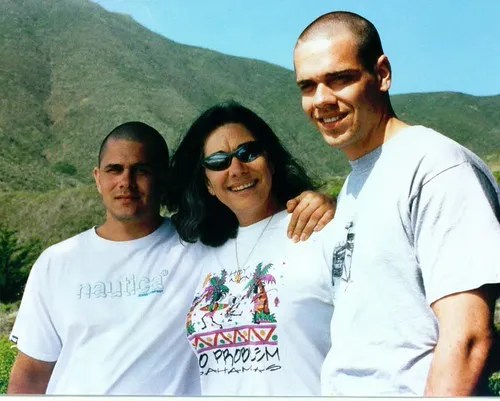
Dustin, Lynn Ann & Daniel Bogard

The photo above is of Lynn Ann Bogard and her two sons, Dustin (left) and Daniél (right). She and her husband Craig were kind enough to talk to me about how they are able to continue on in urban youth ministry after their sons’ deaths. The story begins like this:

Craig and Lynn Ann Bogard grew up in a small, predominantly white community in New Mexico but sensed a call to minister to African American youth in central New Jersey after a short-term mission trip to the area in the early 1970s. Thirty-five years later, despite living through periods of relying solely on God for their next meal, the Bogards are still at it. They have faced the kinds of challenges that only a deep and abiding faith could pull them through — fundraising struggles, misunderstandings about their motives by both blacks and whites, and, most recently, the untimely deaths of their two beloved sons, Daniél, 28, in 2004 and Dustin, 25, in 2007.

I’ve been aware of the Bogards’ Aslan Youth Ministries for many years, but only just met Craig Bogard last month. As I listened to this slight, serious man recount Aslan’s history, what I really wanted to know was: How do you keep ministering to other people’s children when your own were taken from you?

You’ll find the answer to that question and a whole lot more here, and here, at The Huffington Post where the article was reprinted with permission from Urban Faith.

Running for Research Coast to Coast @CTF.org

I love being a member of the NF Endurance Team and have just had my first post published on the team blog at the Children’s Tumor Foundation website. It’s about my running journey and my latest event. Here’s how it begins:

I didn’t imagine when I ran my first half marathon with NF Endurance in October 2008 that I’d be running my third on the other side of the country in 2010, or that I’d register for my fourth while my calves were still tight. Yet, here I am whittling down my times and racking up donations for a great cause!

I’m a Jersey Shore native, but my family and I had been living in Southern California when my son Michael, a friend and I signed up for Long Beach in 2008. Four days after we registered, my other son and NF hero, Gabriel, died tragically and unexpectedly. Despite the rawness of our grief, we decided to honor his memory by keeping our commitment to the team. There was little thought to race times, but we did raise more than $2,600 and had a wonderful, poignant day.

My family and I then moved home to central New Jersey and I ran the New York City Half Marathon with a tiny NF Endurance team in the blistering August heat of 2009. That too was an emotional, glorious race that finished yards from the World Trade Center site, and I raised another $1,220.

I knew my next event would have to be on my sandy home turf at the Jersey Shore. I was nervous about the April 17, 2010 date though, because the April weather here is generally miserable and I’ve never been a bad weather runner. My nightmare scenario was running on the boardwalk for 13.1 miles with icy, rainy wind blowing off the Atlantic and into my face. Long before April rolled around, I was contending with blizzards and torrential downpours. …

You can read the rest here, and while you’re at it, consider a small donation. Any size will do.

Running in the Shadow of 9/11 @Her.meneutics

There isn’t much to say in introduction to this essay except that it’s not what I intended to write. I had thought perhaps I’d get it out of my system and then write a more forward looking piece, but the editors wanted this. Here’s a clip from the middle of the essay:

On Sunday morning, the race began with a seven mile loop of Central Park. We emerged from the park onto 7th Avenue to the sound of cheering crowds. A smile crossed my face so big it made me laugh. Owning Times Square for a moment felt as magical as I imagine it must feel to be a Broadway star. We turned right onto 42nd Street and loped over to the West Side Highway, where we were greeted by showgirls and guys dancing and singing us on to victory. It was about then that my legs began to get heavy and tight, but I ran a really smart race. I paced myself, stayed in the shade, stopped at every fluid station, stretched, and ate packets of salt as advised in the 87 degree heat. Someone later asked if I ever thought of quitting. No! I was having too much fun taking pictures and tweeting as I ran and walked!

Besides, how could I quit with Dribble the World runner Ashley Ten Kate bouncing her basketball a few strides ahead of me for 13.1 miles! According to its website, Dribble the World “exists to save the lives of orphans in sub-Saharan Africa using the game of basketball.” There was also the 13.1 Virgin runner, who I thought was running in support of abstinence until someone who doesn’t write about the sexual revolution and its consequences informed me was probably a first time half-marathoner. Duh.

Sprinting for the finish line a couple hundred yards from Ground Zero, though, I started to cry again. It was as if all the happiness and pathos of my life was represented in that course. …

You’ll have to go to Her.meneutics to read the whole thing.

Speak the word only and my soul shall be healed.


I spend a good deal of time defending evangelicals, both in the real world and in the virtual one. I’ve begun to realize, however, that I’m often defending aspects of evangelicalism that I don’t care for myself. For example, in a discussion that followed my Her.meneutics post on “Hooking Up,” I defended followers of Bill Gothard against some rabid criticism, even though I deplore the sort of legalism Gothard represents. And last year, at Brandeis University, as one of two evangelicals amidst a dozen or more religion journalists doing a fellowship on Judaism, I repeatedly defended evangelicals against negative stereotypes that I myself have pondered in print.

I bring this up because, now that I’m home, I don’t fit easily in some of my old evangelical circles. Not that I ever did, but it’s been a while since I’ve been immersed in certain of our popular religious practices. I find myself shocked at things I once gave ne’er a thought to. I had hoped, for instance, that attending a Bible study led by a dear friend and wonderful teacher would bring me comfort. Unfortunately, I don’t care for the Bible study material we are using. It wants to turn the Bible into a self-help manual and its characters into heroes, and I don’t. I’m also tired of studying the Bible to extrapolate every last ounce of possible meaning out of it. It follows then that I don’t want to rip it into shreds and remake it in my own image. I mostly just want to read it for the comfort and correction I find in it.  So, there’s that and then the study group is composed of women from both sides of two church splits I lived through. There’s nothing awkward in this, except that I get a clear picture of where I’ve been and see pretty clearly that I no longer belong there.  I love and appreciate those places, but rarely find comfort in their forms of worship, whereas I always find comfort in the Anglican liturgy. Always. Never once in my three years as an Anglican has it failed to do its work on me. I live for Sunday worship because Sunday worship imbues me with the power and peace I need to live. (Worship is about God, but it gives back.)

I mention this because it relates to the topic at hand. That topic is pain. Deep, abiding psychic, spiritual, emotional pain that sometimes lasts for days on end.

Last night I was in that kind of pain, and so I picked up Nancy Guthrie’s book, Hearing Jesus Speak into Your Sorrow. I’m skeptical, not of Nancy mind you, but of my evangelical tribe’s tendency toward weak tea. I began reading nonetheless.

In chapter 3, she deals with those who would suggest that our children ( hers, and mine by inference) who died would have been healed if only we (or they) had had more faith. Nancy chose the story of Jesus healing the leper in Mark 1: 40-42 as her text for dealing with this issue. She came across the passage in the months after her daughter Hope died and says it hurt her feelings to think that Jesus was not willing to heal her child. I know exactly what she means. On the morning Gabe died, I said something to God that I don’t recall ever saying to Him before. I lay in my bed, and said, “God, if I were honest, I’d tell you I don’t think you love me anymore. How could you let my children …” A little while later, I said something harsh to Gabe about him wearing a dirty, smelly shirt to work again, and then went for a long prayer walk so that I could get my thoughts back in line with the truth of God’s word and affirm my trust in His love for me and my children. Before the day was done, my son was dead.

Nancy’s implicit trust in God led her to dig deeper into the Scripture to find out what Jesus was really communicating through his miracles (particularly the healing miracles). She came to the conclusion that if Jesus’s healing ministry had been mostly about healing physical sickness, it would have been more pervasive and central to his focus. Also, physical healing is by nature temporary and God didn’t come to earth for a temporary fix. In John 20: 30-31, we learn that the purpose of Jesus’s miracles is that we might believe, and believing, “have life by the power of his name.” Jesus’s priority was our deliverance from the ultimate source of our suffering and that is the sin that separates us from God. About the fall, Nancy writes:

Into the purity of the world God created, sin brought a poison that penetrated everything. And into the relationship we enjoyed with God, sin built a barrier. We went from being at peace with God to feeling threatened by him. Guilt and fear took over where innocence and openness had once ruled.

Ever been there? I have, at least once in the past 24 hours. And yet, she reminds us,

There is a day coming when death and disease will be healed for good. That is our sure hope in the midst of sorrow.

The passage that penetrated my pain last night is this one:

When Jesus said, “I am willing. Be healed!” to the leper, he was saying that he wants to cleanse us from the pervasive sin that will prove eternally fatal without his healing touch.

And now I realize that Jesus turns toward me when I call out to him for healing. Now I can hear him lovingly responding to me, saying, “I am willing. Be healed.” He is at work in my life, bringing healing to the wounded places where sin has left its ugly mark. He certainly isn’t finished yet, but I know the day is coming when his work in me will be complete.

I’ve also come to peace realizing that Jesus did not withhold his healing touch from Hope or Gabe. He has taken them to himself and will, at the resurrection, give them glorious bodies (Philippians 3:21). And this is no get-God-off-the-hook cop-out. It is everything we would ask for and long for.

It is the last paragraph that stuck with me as I went into today. I don’t want get-God-off-the-hook cop-outs. I want the truth. And the truth is that Gabe’s brain was sick from neurofibromatosis, from years of asthma-related oxygen deprivation, from inordinate guilt emanating from suicidal depression, from … The truth is his resurrected body will be tumor-free. The truth is the impulsivity and feelings of aggression that are common to both NF patients and suicide victims will be gone forever. The truth is he will breathe easy and never again have to say no to an invitation because of a household pet. The truth is he now knows and will for all eternity know that he is loved and lovable and lovely. The truth is it’s not my fault.

I didn’t process all of that last night. I simply held the last paragraph in my mind and went to sleep. This morning, I was still in pain.  At church, neither the opening hymns nor the visiting priest bade well for healing, and yet heal the liturgy did. I took note when the priest used alternate phrasing in the prayer we say before taking communion. Phrasing that echoes what Nancy wrote about from Mark 1. It is a sentence that I silently add every week and keep wishing our rector would use instead of the other. It is a piece of the reason why the liturgy never fails to do its work on me. There is power in the prayer:

Lord, I am not worthy to receive you, but speak the word only and my soul shall be healed.

He is willing, and so I am healed when I take his body and blood into my own in faith. There is power in the blood. One mustn’t forget that. Afterwards, we echoed these sentiments again as we sang the African-American Spiritual, There is a Balm in Gilead. It goes:

There is a balm in Gilead, to make the wounded whole. There is a balm in Gilead to heal the sin-sick soul.

Sometimes I feel discouraged, and think my work’s in vain, but then the Holy Spirit revives my soul again.

There is a balm in Gilead, to make the wounded whole. There is a balm in Gilead to heal the sin-sick soul.

If you cannot preach like Peter, if you cannot pray like Paul, you can tell the love of Jesus and say, “He died for all.”

There is a balm in Gilead, to make the wounded whole. There is a balm in Gilead to heal the sin-sick soul. …

Sometimes I feel discouraged and think my work has been in vain, but then the Holy Spirit revives my soul again. I cannot preach like Peter; I grapple with too many negative triggers and questions. I cannot pray like Paul; I don’t know how anymore, except in the most general terms. I can tell the love of Jesus though, and say, “He died for all.” For all the broken, battered and bruised. For all the sin-sick lonely souls. For all the high and mighty liars. For all the orphaned, starving children. For me. For you. For Nancy. For her Gabe. For mine. For evangelicals and our critics.  For every tribe—past, present and future. There is a balm in Gilead to make the wounded whole. There is a balm in Gilead to heal the sin-sick soul.

Notice, if you will, that the day’s healing was found in drinking from deep evangelical wells.

“I’ll just stay silent. That’s the way to honor; the only way to respect.”

Those were Gabe’s thoughts on the first anniversary  of the 9/11 terrorist attacks, as copied from an archive of his poetry and art  that we’re developing.

Our Friend Sleeps

I do not want you to be ignorant brethren, concerning those who have fallen asleep, lest you sorrow as others who have no hope. For if we believe that Jesus died and rose again, even so God will bring with Him those who sleep in Jesus.

For if the dead do not rise, then Christ is not risen. And if Christ is not risen, your faith is futile; you are still in your sins! Then also those who have fallen asleep in Christ have perished. But now Christ is risen from the dead, and has become the firstfruits of those who have fallen asleep.

When all the people had completely crossed over the Jordan, the Lord spoke to Joshua, saying, "Take for yourselves twelve stones from here, out of the midst of the Jordan, from the place where the priests’ feet stood firm. These stones shall be a memorial for the children of Israel forever. This Jesus God has raised up, of which we are all witnesses. Witnesses chosen by God, … who ate and drank with Him after He arose from the dead.

John 11:11; 1 Thes. 4:13-14; 1 Cor. 15:16-18; Josh. 4:1-3,7; Acts 2:32; Acts 10:41  

[March 28th evening reading from Daily Light ] .

A friend’s poem:

For Gabe

A bit of scoff blows through my nostrils
At those who insinuate or aver,
“Here, spoken in my syllables
Printed upon this page,
Measured by the electrochemical activity in my frontal lobes,
I, we, us,
Possess, here, now,
Answers.”

What secret have you unearthed,
That which has eluded the likes of
Socrates, Augustine, Nietzsche, Freud

Answer
The demands of the scars upon my knuckles
Patches of hardened, darkened skin as reminders of
A joke you no longer share with us.
We no longer hear.
Cracked in your name.

You too had a patch.
A laugh, a swagger in your stride,
But no answers for fools like us.

[© Chuck Liu, 2008, used with permission.]

Repost:


Gabe

You came sparkling into the world,

a firecracker bursting multicolored across the sky,

your soft brown skin glowing with delight at

everything your eyes beheld—

I loved you from the first. 

You spoke in sentences sweet

when barely a year had passed,

and when the wedding bells did ring

a granite floor was laid beneath your tiny feet. 

The Lord has made a miracle,

he’s made one bright and true;

he sent it shining through the night

to come reside with us. 

Never from that swollen golden crimson time

until this frozen grey has

my heart known a moment without

beating just for you.

[© cas, 1998]

In memory of Gabriel Gifford Scheller: November 27, 1984–March 28, 2008 .

Being Well When We’re Ill

 being-well-when-were-ill

Last week Christianity Today announced its 2009 book awards, which evaluate books published in 2008. For several years now, I’ve served as a judge in the Christian Living category, and been introduced to some wonderful books that I might not have otherwise read. I’ve also trudged my way through a few that, well, I didn’t care for. (What does Rob Bell have against proper paragraph structure anyway?) Sometimes I’ve been in sync with the other judges and sometimes I haven’t. This year, I was. The winner, Reconciling All Things: A Christian Vision for Justice, Peace and Healing was excellent, as are most InterVarsity Press books that I’ve read. IVP books are consistently well edited: The writing is always tight and readable, the style clean and the content substantive.

My top choice, however, was the Award of Merit winner: Being Well When We’re Ill: Wholeness and Hope in Spite of Infirmity by theologian Marva J. Dawn. I chose this title even though the editing could have been tighter, because content is queen.  Dawn lives with multiple physical infirmities, and still manages to have a full life of writing, teaching and speaking. She writes an honest account of the challenges those ailments pose for both her and her husband. The book is laid out in chapters that work nicely as daily devotions. They begin with a Scripture and end with a prayer. Sandwiched between are Dawn’s theological and personal reflections.

Being Well When We’re Ill isn’t just a book for sufferers, but also for caretakers. It isn’t designed as such, but in my role as spouse and mother to three (now two) chronically infirm family members, I found it exceedingly helpful. For example, chapter nine is titled Loneliness–Community. It begins with a meditation of David from Psalm 31:9-12:

Be gracious to me, O LORD, for I am in distress; my eye wastes away from grief, my soul and body also. For my life is spent with sorrow and my years with sighing; my strength fails because of my misery and my bones waste away. I am the scorn of all my adversaries, a horror to my neighbors, an object of dread to my acquaintances; those who see me in the street flee from me. I have passed out of mind like one who is dead; I have become like a broken vessel.

Dawn notes that this psalm comes from a time when physical afflictions were often thought to be God’s punishment. David emphasizes his feelings of alienation from friends and neighbors, and his enemies’ delight in his sorrow. Most telling though, are his feelings of abandonment. In an earlier chapter Dawn examined the blame that is frequently assigned to those who suffer.  She revisits the theme here:

Some people espouse the bad idea that we experience chronic illness or handicaps because we have done something wrong. Then such people try to help us fix it, which leads to a different kind of isolation.

The types of isolation she identifies are: physical isolation, intellectual isolation, emotional isolation and envy, social isolation, misunderstanding and spiritual isolation.  In the midst of the discussion, she quotes seminary professor Arthur Paul Boers:

I learned long ago in giving pastoral care that in stressful situations people feel not just severely alone but profoundly misunderstood. The sense that “I’m the only one who knows, understands, or feels this” may be ever more difficult than whatever appears to be giving the pain. … It is important to name and share the details and to have someone else listen to them.

Not only have I been on the receiving end of such misunderstanding regarding my husband’s and sons’ infirmities, I have also been the one to alienate and isolate them because of my own ignorance of their conditions. Dawn’s book helps me to better love my family and stand with them against the misunderstanding of others.

Her advice for strengthening ourselves spiritually is rich:

As emphasized in previous chapters and emphasized through the Scriptures, the Trinity is never apart from us, even when we feel that we are enduring a dark night of the soul. But our various kinds of isolation and the deep loneliness that results make us feel that God is absent too.

That is why it is so important that we establish habits of reading the Scriptures, so that we can trust what we know over what we feel. When we feel most estranged from God, we find great treasure in texts that assure us of the Lord’s presence. …

We cherish the sacrament of the Eucharist, for it gives us bread and wine so that we can know Christ’s presence in a tangible form. In the same way, the sacramental work of the church is to be a physical sign of the Trinity’s presence for the sake of everyone, especially the lonely.

The chapter ends with this prayer:

Almighty God, by your Holy Spirit you have made us one with your saints in heaven and on earth: Grant that in our earthly pilgrimage we may always be supported by this fellowship of love and prayer, and know ourselves to be surrounded by their witness to your power and mercy. We ask this for the sake of Jesus Christ, in whom all our intercessions are acceptable through the Spirit, and who lives and reigns for ever and ever. Amen.

Being Well When We’re Ill is a book I would give to others and that I highly recommend. It’s one I would never have been introduced to had it not been for the book awards. Don’t miss this gem!

Another book that my husband and I have been recommending a lot, especially to the young and spiritually alienated, is Scot McKnight’s The Blue Parakeet: Rethinking How You Read the Bible. I saw no mention of it in this year’s awards. I’m sorry about that, as I would have preferred it to a couple other contenders.

Long Beach 13.1

We did it … together! Our first half-marathon. Mike in 3:28:17; Chris and D in 3:42:09. Jeff manning the NF tent for 4:00:00+.

Total donations on our behalf to the Children’s Tumor Foundation$2145 $2170 $2220 $2345 $2370 $2490 $2590 $2640.

In honor of Gabriel Gifford Scheller.

John 25:11

Update 10/21/08: My original goal for the Long Beach 1/2 marathon was to raise $1000 for the Children’s Tumor Foundation. After Gabriel died, I increased our goal to $5000. Memorial donations in the amount of $1945 have been recorded in Gabriel’s name. Combined with our race sponsorships, we’ve raised a total of $4,435 $4,535 $4,585 for CTF. Again, many thanks to all who’ve given so generously!

Update II, 10/23/08: The NF Endurance Team slide show from Long Beach is up. Together our team of 20  raised $10,000, $2590 $2640 of it on behalf of Team Scheller.