Domestic Abuse: Coming to a Church Near You @Her.meneutics

Sin by Silence Poster“How long am I to remain in this relationship?” This is the haunting question 65-year-old Glenda Crosley asks in the documentary, Sin by Silence, about the abusive husband she killed in 1986. She has been in prison for as long as she was married — 24 years — and wonders when her ordeal will be over.

In the film, shot almost entirely inside the California Institution for Women, Crosley says the first time her husband, Sam, “truly got physical” was when she was eight months pregnant with their second child. He shoved her into a wall. Eventually she came to believe that the violence wouldn’t end until one of them was dead. According to The Bakersfield Californian, at the time of Sam’s murder, the couple was separated and having an argument in a parking lot. When Sam walked away from her car to the trunk of his, she believed he was going to get the tire iron he had threatened her with the week before. She rammed him once, drove away, then turned her car and hit him again. He died at the scene.

Elizabeth Leonard, author of Convicted Survivors and professor at Vanguard University, a Christian college in Costa Mesa, California, says in the film that women who leave abusive relationships are often subject to “separation assault” and are 75 percent more likely to be murdered than before they left. So the answer to the question: Why didn’t she just leave? is not a simple one. …

Learn why not (and what you can do to help stop domestic violence) by reading the whole article here.

The Smoking Bra Flames Out AKA The Unfunny Side of Modern Feminism @Her.meneutics

I enjoy reading the perspectives of the women at Slate’s Double X channel. (I also like Ann Althouse and Penelope Trunk, two smart, quirky bloggers who live in Wisconsin.) But I’ve had a particular fondness for Double X editor Hanna Rosin ever since she reported on the Christian homeschooling movement because, having done so myself way back in 2002, I think she did it well. I’ve wanted to meet her, which was at least part of the reason I trekked into Manhattan for an event Double X was hosting about feminism and comedy.  I did meet her too, and enjoyed it. We had a little conversation about the word lady, which was used frequently by the women on stage. I found that startling and asked about it in the Q&A. That discussion  made it into the online video, only you never see my face or hear my voice, thank God! As to the comedy, I love a good laugh as much as anybody and I did laugh some, but I’m just not a fan of potty humor, so I wrote about that for Her.meneutics. My analysis begins like this:

Is feminism funny or humorless? That was the question asked and evaluated at a Slate event I attended in New York City called Double X Presents: The Smoking Bra: Women and Comedy. I thought the question was worth exploring because, like so many contentious topics, feminism doesn’t often inspire laughter. Problem is, I was looking in the wrong place for an answer.

I would describe the show in detail, but doing so would violate Philippians 4:8, which instructs us to think on things that are true, noble, right, pure, lovely and admirable. Much of what I saw and heard was anything but that. …

For a thoroughly sanitized description of what I saw, read the rest here. For un-sanitized clips from the event itself, go here and here. If you do check out the clip from Morgan Murphy‘s routine, perhaps you’ll get a sense of an inherent modesty that comes through her profanity laden performance. Even when she’s joking about “sexting” with a guy, she communicates a certain level of discomfort with the endeavor. Please come back and tell me what you think!

As to the photo above, I lifted it from Google images. It is an advertisement for a product made by Swiss underwear manufacturer Triumph International. I’m sure they won’t mind the free plug. Then again, given the product, I could be wrong.

Ordained Into Wet Cement: What Does ‘Anglican’ Mean? Not @TheRevealer after all

Way back in August, when Becky Garrison wrote a little article “Ordained Into the Abstract: What Does Anglican Mean?” for The Revealer, which describes itself as “a daily review of religion and media,” I tweeted that I disagreed with her point of view and her description of evangelicals in the piece. An editor at the review direct messaged me asking if I would consider writing a response, which I did. Amidst the busy September religion news cycle, my response was left to grow stale.

Then this weekend, while I was tweeting away at the Religion Newswriters Association annual conference in Denver, I received an email from the editor asking me to revise my response. She said she could intuit from the piece what my political positions are on homosexuality and women’s ordination and she challenged me to come out with them and speak up for injustice where I find it. I replied that people choose their churches for complex reasons and that it would be wrong to assume anything about my positions based on where I go to church, because I’ve never entirely agreed with the values of a church I’ve attended and that remains true now. I also said that as a journalist, I feel no responsibility to be on the record about all any of my personal convictions.

As it happens, on the way home from Denver, I read an article about Anglican-Episcopal splintering over homosexuality in a lofty religion journal. The writer did a good job giving voice to both sides of the issue, but I could easily discern from the sources he quoted in his sidebar and who he gave the last word to in the main article that his sympathies lie with liberal Episcopalians on this issue. It also happens that Facebook recently suggested this writer as a “friend” for me. From his profile picture with another man and the comments that accompanied it, I just as easily discerned that he is gay. I wondered as I was flying through the night if the neutral tone masking his personal stake in the issue isn’t more of a problem than terminology or my own unwillingness to state a bias that I do not possess about an issue in which I have much less personal stake. It all seems so odd to me.

In the end I decided that the revisions the editor requested would be too time consuming, given that I will not be paid for the work. So here is my very stale response to Becky Garrison’s contention that it is wrong to call breakaway priests and churches Anglican.

In her Revealer article, “Ordained Into the Abstract: What does ‘Anglican’ Mean?” my friend and fellow Episcopalian, Becky Garrison, says the term Anglican has been distorted by conservative evangelicals and traditionalists who have left the Episcopal church over the issues of homosexual ordination and the blessing of same sex unions. She views the alternate bodies they’ve created as imposters and wishes media outlets would stop bestowing the purebred label on these rogue priests and provinces.

I do not pretend to know what’s in the minds of others, but I do know that the Episcopal Church’s decisions regarding homosexuality are viewed as symptoms of the denomination’s departure from orthodoxy rather than its cause by many conservatives. Becky knows this. It diminishes discourse, in my opinion, to misconstrue the motives of those with whom one disagrees.

We’re all guilty at times of careless generalizations, but when Becky links to an interview by fellow Episcopalian David Neff in Christianity Today as a kind of circumstantial evidence of media complicity in this crime, I must cry foul on her crying foul. What her assessment sounds like  is less a critical analysis than an ardent fan blaming a biased umpire for deciding a call in the other team’s favor.

I myself was confirmed an Anglican at St. James Church in Newport Beach, CA, when it was affiliated with the Diocese of Luwero, Uganda, after it left the Episcopal Church. When my membership was transferred to an Episcopal church last year, the diocese didn’t question the validity of my confirmation or ask me to be re-confirmed now that St. James has aligned itself with an upstart North American Anglican organization. It’s a good thing too, because I would have refused. However much our presiding bishop disagrees with traditionalists, he still apparently views us all as Anglicans. Why the Rev. Doctor Maggi Dawn (who Becky cites) should hold more sway in regard to who is and who isn’t an Anglican than him or Ugandan Archbishop Henry Luke Orombe under whom I was confirmed, I cannot imagine.

If Becky wants to appeal to an individual at all, perhaps it ought to be Archbishop of Canterbury Rowan Williams, who, in the wake of the Episcopal Church’s consecration of its second gay bishop said her election “raises very serious questions not just for the Episcopal church and its place in the Anglican Communion, but for the Communion as a whole.”Additionally, the Anglican Church issued a statement to the Episcopal News Service saying the consecration “shows that the TEC [the Episcopal Church] has now explicitly decided to walk apart from most of the rest of the Communion.”

Now, I respect the fact that Becky is a cradle Episcopalian while I am a church hopping mixed-breed evangelical, but I honestly don’t get her appeal to Anglican history either. Ours is a branch of Christianity that was founded in dissent and our democratic forbears were given special consideration, not to mention a unique name, because it was impossible for them to swear fealty to the English crown. We North American Anglicans are, for better and worse, acting in accord with our heritage, both political and ecclesial. In attempting to widen her argument to include Newsweek’s use of the term Presbyterian to describe Redeemer Presbyterian pastor Tim Keller, Becky demonstrates nothing so much as that denominational splintering is writ large in Protestant DNA.

Had my friend appealed to the 1930 Lambeth Conference statement as Anglicans Online did instead of maligning evangelicals and appealing to Lambeth generally, I might have given her argument more sway, though I still would have disagreed. Here’s how Anglicans Online describes its decision to label The Anglican Mission in the Americas (AMiA) as “Not in the Communion”:

“When a person or parish leaves a national church, for whatever reasons—doctrinal, personal, spiritual, theological—it does just that: it leaves. The leaving is tantamount to saying: ‘This entity has become something I can no longer be a part of’. That decision prima facie breaks communion.

In these days of easy transport and effortless technology, of course it is possible to virtually affiliate with another part of the Anglican Communion that seems to be more in line with one’s own thinking. But unless one physically moves oneself or one’s parish to that geographically-defined national church, one cannot claim to be in communion through some sort of virtual relationship.

Perhaps the definition of a national church or province will need to be altered, to take into effect the increasing globalisation of the communion through the Internet and what that means to the understanding of ‘diocese’ or ‘episcope’. As yet, that redefinition has not taken place.”

But can redefinition be far off?

A more interesting subject for this type of critique would be The Huffington Post Religion channel headline: “Interview with Toni Tortirilla, Female Catholic Priest.” The accompanying Religion News Service (RNS) article clearly states that Tortirilla was ordained in the Roman Catholic Womenpriests movement. It proceeds to say that “within a year of her 2007 ordination, the Vatican said women who attempted to be ordained—and those who tried to ordain them—were automatically excommunicated.” The Pope can do that sort of thing, so it seems to me that The Huffington Post is being intentionally provocative in describing Tortirilla as a Catholic priest. In comparison, describing internationally recognized Anglicans by their preferred name isn’t controversial.

While Becky advocates careful use of terms, she herself is careless. In her conclusion, for example, she writes, “This battle over the blessing of same sex unions and ordination of gay clergy needs to be placed in the larger context of the culture wars being waged by fundamentalist Christians against the rising forces of ‘secular humanism.’ In the eyes of these righteous warriors, their chief enemies are feminists, gay activists and others who advance what they perceive to be the ‘secular humanist’ agenda.” Suddenly she is no longer talking about evangelicals involved in an intra-denominational dispute. Now their actions are a function of fundamentalists fighting secular humanism. As an evangelical Anglican, I must protest.


Pressing Past the Heartbreak @UrbanFaith.com & @HuffingtonPost.com

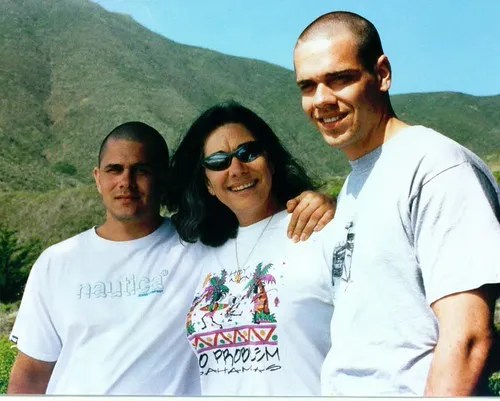
Dustin, Lynn Ann & Daniel Bogard

The photo above is of Lynn Ann Bogard and her two sons, Dustin (left) and Daniél (right). She and her husband Craig were kind enough to talk to me about how they are able to continue on in urban youth ministry after their sons’ deaths. The story begins like this:

Craig and Lynn Ann Bogard grew up in a small, predominantly white community in New Mexico but sensed a call to minister to African American youth in central New Jersey after a short-term mission trip to the area in the early 1970s. Thirty-five years later, despite living through periods of relying solely on God for their next meal, the Bogards are still at it. They have faced the kinds of challenges that only a deep and abiding faith could pull them through — fundraising struggles, misunderstandings about their motives by both blacks and whites, and, most recently, the untimely deaths of their two beloved sons, Daniél, 28, in 2004 and Dustin, 25, in 2007.

I’ve been aware of the Bogards’ Aslan Youth Ministries for many years, but only just met Craig Bogard last month. As I listened to this slight, serious man recount Aslan’s history, what I really wanted to know was: How do you keep ministering to other people’s children when your own were taken from you?

You’ll find the answer to that question and a whole lot more here, and here, at The Huffington Post where the article was reprinted with permission from Urban Faith.

On Quitting the Circus & Coming Home to the Jersey Shore @HuffingtonPost

A while back I was invited to blog for The Huffington Post Religion channel. I had a nice conversation with an editor who I’d met in 2008 at a professional event. I sent a couple emails in reply and heard nothing back. I submitted the post below last week and heard nothing back. I called and left a message for the PR guy who emailed me when the channel went live and heard nothing back. So I’m posting my introductory The Huffington Post post here. Perhaps someone at The Huffington Post will discover it and get in touch, either to tell me that they want it and/or me or that they don’t. Either way, this lighthearted, but very serious post reflects my current spiritual convictions and my current state of mind, which is contentedly and resolutely conflict averse. So,  if you’re reading, just pretend you are at the swarming open-source site being introduced to me for the very first time. Here’s what I’d have to say:

I was sitting on the front porch of the aluminum-sided duplex I rent from my mama and daddy, talking to my chickens and looking through the rusty old chain link fence, past a neighbor’s immovable pile of junk and the port-o-potty that’s taken root in the yard of a newly manufactured home like it’s a perverse old local pine, at a kid in a hunter green pick-up truck squealing out of the neighborhood and I thought to myself, “This is why people call this town Bricktucky.” It’s an insult that I’ve only recently been introduced to, though I’ve lived here at the Jersey Shore nearly all my life.

Never mind that it’s a short two mile jog from my neighborhood to some of the most expensive beach front real estate in New Jersey and nine miles southeast to the party town where American television is creating the same kind of distorted image of the Jersey Shore and Italian Americans that Neil Postman said it does of everything that matters. There’s a Moose Lodge between me and the summering glitterati and the most prominent Italian American influence that I observe here besides the dominant culinary one is the Roman Catholic Church.

It startled me, for example, after a six year sojourn in Orange County, California, to come home and find the local Gannett affiliate reporting on Ash Wednesday services as if they were a matter for serious consideration. In the land of the mega-church, the impartation of ashes was an opportunity to be identified with him who was despised and rejected, or at least with him who was a religious sideshow oddity.

Speaking of the circus, there is the carnival that is summer at the Jersey Shore and then there is a bucolic day-in, day-out life that nourishes those who live it. The same could be said of American Christianity. The abundant life resides in a parallel universe from the carnival performances of pseudo-celebrities and culture warriors left and right. Sometimes the universes intersect. Often they collide.

I didn’t always know this. I had my favorite Christian authors and radio preachers. I heard a particularly insightful one speak at a conference once. He was getting close to retirement and sprinkled his talk with appeals to buy his books so that he could enjoy his golden years. Another one, whose radio broadcasts nourished my budding faith in the early 1980s, was, twenty-five years later, the only mega-church pastor in an affiliation of them to publicly stand by my husband and me after we publicly confronted his spiritual mentor’s corruption.

You can be assured of one thing only when it comes to successful preachers and authors: they are compelling communicators. They’ve no doubt worked hard to get that book or sermon written while you’ve been lounging at the pool (or, in my case, the coop), but I’ve met and/or interviewed enough authors and speakers to assure you that prominence and godliness don’t go together like Guidos and Guidettes. Your grandma is more likely to be an accurate reflection of the risen Christ than anyone who’s sought and endured the limelight, including me.

You need to know this if you want to live the abundant life our savior promises rather than aspiring to the fun house mirror distortion. Becky Garrison gets this and writes about it in her new book, Jesus Died for This? A Satirist’s Search for the Risen Christ. Garrison is the daughter of an eccentric Episcopalian priest. Although her father preached civil rights in the south when that was a dangerous thing to do, he also reportedly dropped acid with Timothy Leary. She writes, “Dad overloaded his sermons with countercultural slogans that were full of tolerance but light on theology. Without the power of the risen Christ, Dad’s civil rights activism that drew him to the priesthood was reduced to Sesame Street sing-alongs.” About her progressive peers, she says, “When peaceful progressives downplay the life-transforming power of the resurrection, they reduce the words of ‘social justice’ Jesus to just another prophetic voice calling people to repent.” And about herself, she reflects, “I can very easily get caught up in critiquing emergent exercises, progressive power plays, and other ungodly games that I forget to follow the living Christ.”

Garrison’s hyperbolic take on American Christianity reminds me of John Hurwitz’s and Hayden Schlossberg’s take on South Jersey in Harold and Kumar Go to White Castle. You remember when the main characters get lost in the Pine Barrens and battle it out with deer and peculiar country bumpkins? When I wasn’t cringing at their crudity, I was laughing myself silly at the duo’s depiction of my sacred soil, because it was so obviously rooted in a wry love of home. (Hurwitz and Schlossberg are natives of semi-rural Randolph, New Jersey). Likewise, Garrison’s skewering of the religious carnival is rooted in her love for the real thing and the bitter experience of seeing the spotlight shine so brightly on the center ring.

So, just remember, next time you’re reading that new spiritual memoir (or any post of mine): if the message doesn’t turn you back to your own life and its local sources of nourishment, turn your back on it.

Now I gotta’ go pickle those beets I picked yesterday with my mama. She taught me most of what I know about loving God and living the Christian life. That’s why I quit the circus and came home to her.

Thanks for reading.

Update 8/19/2010: The Huffington Post published an earlier version of the post. Thanks HuffPo!

I’m a Child of Urban Ministry @UrbanFaith

I’m alive today because God used an urban ministry to bring my parents together, and to lead our family to a more dynamic faith.

My bio here at UrbanFaith says that I’m a product of urban ministry. Readers might imply from that statement that I came to faith in Christ through an urban outreach program, and if they did they’d be wrong. Although my earliest memories are urban ones, I grew up in a bucolic mile-square beach town that people visit to escape city life. What I mean is that I’m literally a product of urban ministry, and I owe its practitioners a great spiritual debt. …

Read the rest here.

The Laborers Wages Are Few @UrbanFaith

My second column is up at Urban Faith. It was inspired by a recent tour I took of the Village of Hope, a ministry of the Orange County Rescue Mission in Southern California. Here’s a clip from the middle that reflects the heart of the piece:

A problem that is not unique to OCRM is that workers are sometimes valued less by donors than the work they do. Although we enable the achievements benefactors want to support, we don’t always give back the ego gratification that some of them desire. So, when I recently toured the Village after not having been there for eighteen months or so, I was somewhat ambivalent about its increasingly impressive campus. …

Read it here.

Eating Problems for Breakfast: An Interview with Kay Cole James @TheHighCalling

Kay Cole James is an impressive woman who shared her considerable wisdom with me on behalf of The High Calling. She talked about what makes a good employee, how she gained the confidence to run the federal workforce, what she thinks of her successor, how she handles that damning Wikipedia article, and more.  Here’s the intro:

Kay Cole James was Director of the U.S. Office of Personnel Management when the 9/11/2001 terrorist attacks occurred. In the wake of those attacks, she oversaw the reorganization of agencies and endured misplaced criticism for allegedly hiring alumni from Regent University, where she had been Dean. James is now culling from these and other personal and professional experiences to shape a new generation of leaders through her work at the nonprofit Gloucester Institute. James talked to TheHighCalling.org about what it takes to be a success, both at work and at home. …

Go here to read the interview. While you’re there, why not check out the other High Calling offerings? It’s a great site, and no one paid me to say that!

Running for Research Coast to Coast @CTF.org

I love being a member of the NF Endurance Team and have just had my first post published on the team blog at the Children’s Tumor Foundation website. It’s about my running journey and my latest event. Here’s how it begins:

I didn’t imagine when I ran my first half marathon with NF Endurance in October 2008 that I’d be running my third on the other side of the country in 2010, or that I’d register for my fourth while my calves were still tight. Yet, here I am whittling down my times and racking up donations for a great cause!

I’m a Jersey Shore native, but my family and I had been living in Southern California when my son Michael, a friend and I signed up for Long Beach in 2008. Four days after we registered, my other son and NF hero, Gabriel, died tragically and unexpectedly. Despite the rawness of our grief, we decided to honor his memory by keeping our commitment to the team. There was little thought to race times, but we did raise more than $2,600 and had a wonderful, poignant day.

My family and I then moved home to central New Jersey and I ran the New York City Half Marathon with a tiny NF Endurance team in the blistering August heat of 2009. That too was an emotional, glorious race that finished yards from the World Trade Center site, and I raised another $1,220.

I knew my next event would have to be on my sandy home turf at the Jersey Shore. I was nervous about the April 17, 2010 date though, because the April weather here is generally miserable and I’ve never been a bad weather runner. My nightmare scenario was running on the boardwalk for 13.1 miles with icy, rainy wind blowing off the Atlantic and into my face. Long before April rolled around, I was contending with blizzards and torrential downpours. …

You can read the rest here, and while you’re at it, consider a small donation. Any size will do.

Art That Reveals Our Need for Grace @Her.meneutics

My latest post is up at the Christianity Today women’s blog, and it’s one I really love because the artists  it features are so inspiring (both the film makers and the photographers). I had the privilege of speaking to the artist who took the picture below and communicating by email with a couple others. What a pleasure! I hope this post makes you smile, and causes you to ponder your own limited vision. It begins like this:

After seeing an advertisement for the 8th Annual Garden State Film Festival on Twitter, I requested a press pass, thinking I might screen an inspiring film or two that I could recommend to Her.meneutics readers. The festival director suggested Newt Gingrich’s Rediscovering God in America, which I saw and appreciated, but not nearly as much as two other films. Both reminded me that seeing the world through another person’s eyes is often the route to both empathy and greater self-awareness.

Shooting Beauty introduces viewers to a community of people with cerebral palsy, first through the eyes of an aspiring fashion photographer whose career is diverted as she teaches them how to take pictures, and then through their own and each other’s eyes. The second, Dark Light: The Art of Blind Photographers, defies logic as it highlights the stunning art and unique vision of some of the world’s leading blind photographers. Yes, that’s right, blind photographers. And no, I didn’t believe it either until I saw their work and their processes for myself. Both films tell their stories without either pity or sanctimony. This is a significant accomplishment for filmmakers who don’t travel through life in the dark or by wheelchair.

Shooting Beauty opens with the first person story of Courtney Bent. She initially visits a cerebral palsy day program to photograph its severely disabled clients, but soon discovers that her own limited perspective distorts the images she creates. …

You can read the rest here, and join the conversation either at Her.meneutics or right here at Exploring Intersections.

[Cathedral photo ©Pete Eckert ; all rights reserved. Used with permission.]

I’ll Love You Forever & Until We Meet Again

This Sunday, March 28th, marks two years since my son Gabriel died. Unlike others whose loved ones have passed from this earth, I use the straightforward terminology. “Early departure to heaven” is one description I read recently. I think this person must not have seen their loved one’s body after the spirit left it, because if they had, they’d know it was dead and not just dearly departed.

Anyway, it’s been two years and nothing really gets easier. I still feel as if I’m living in a fun-house surrounded by mirrors that distort reality. Or that reality is veiled. I see the sun; I feel it’s warmth; but I don’t fully inhabit the planet that rotates around it. It’s a strange way to live, which is why working a lot helps. There’s little time or brain power for thinking about such things.

Last week, as I was going through my cloaked, surreal existence, I needed to find a book for an article I was writing. I tore open box after box in my backyard shed and collected a pile that did not include the one I was looking for, but that did include one that transported me back to life lived in real time and space.

It’s called Love You Forever and was written by Robert Munsch. The story begins with the birth of a child. His mother sings him a lullaby until long after he is grown, and then he turns it around and sings it to her when she gets old. It’s a promise to always be there for each other. This particular copy was a 2004 Christmas gift from Gabe to me. Inside the cover, he wrote these words:

Mom, this book always reminds me of you. I love it that you would take time to read to Mike & me all the time. I will never forget the way you sang the song. I was in 5th grade when the teacher read this to us. She sang it all wrong! Online you could buy the read-along tape with the way the song should sound. I’ll bet it’s all nice & perfect, but I don’t ever want to hear that. Your version is perfect for me. I am not sure which section I’m on, but I think Mike is at the one about being a crazy teen. Don’t worry though, eventually we will get to the age when we sneak to your house & take care of you. …

I’ve been carrying this book around the house like it’s my blankie. Jeff asked me if it’s my new bedtime reading. “No,” I said, “I’ve been meaning to write a blog post about it.” The truth is, I do want to hug it to myself and never let it go, or at least stick it under my mattress so it’s always close, because it reminds me of a time when life made a little bit of sense. When my baby was mentally and emotionally healthy. When he took the idea of a long life for granted.

Gabe’s brother chose a copy of this book from amongst all of Gabe’s possessions to be buried with him because the memory of it meant something to both of them. It means something to me too. It transports me out of the distorted fun-house and into reality.

Gabe, I’ll love you forever. I’ll like you for always. As long as I’m living, my baby you’ll be. … And then we’ll meet again. xoxo

A Steel Frame Holds

When my husband and I were dating, I was a 20-year-old single mother and I was determined to finish college because my unplanned pregnancy had forced an unwanted hiatus from school. When we were going through pre-marriage counseling with our pastor, I mentioned this in a session. The pastor said, “You have a baby to take care of,” even as he was encouraging Jeff to extend his 2 year Bible college goal to 4 years. One day, as Jeff and I stood outside the beat up construction trailer that would become our first home, I said, “I will finish college.” He bristled, not because he was unsupportive of my goals (he’s always been that), but because I was making a declaration rather than including him in a decision.

What was implicit rather than explicit in my declaration was a desire to escape a dubious 1970s past. And fear. When my father died of a myocardial infarction at 41 years old, my mother was left with two children to care for on her own. I was terrified of being unprepared for an unpredictable future.

I did finish college, with the help of my mother and my mother-in-law, both of whom babysat, and with the support of my husband, who worked countless hours earning a lucrative income (rather than a degree) so that we were able to pay for my education without incurring any new debt. I finished also because I decided that college would be my hobby. I didn’t go to the gym or the nail salon or on expensive trips. I went to school in my spare time for twelve years and graduated with honors. Only then did Jeff go back to school.

Fast forward a decade and some of my worst fears have come true. My baby is dead and my husband is involuntarily retired due to a physical disability. We’re in the midst of profound grief and profound role reversal. He stays home and I go to work. To make matters worse, my choice of a practical career coincided with historic technological shifts. Journalism is about as unstable and insecure as a career gets. I’ve had to be creative and flexible in order to minimally meet our financial needs. I’ve also had to grapple with that little devil reputation again, because there is a prejudice in our culture toward those, like my husband, who are unable to work. I wrestle with this prejudice myself. And then, there are the emotional challenges of role reversal. Ann Althouse writes this about it:

These deeply embedded sex roles… they don’t change so easily. Being large-minded and flexible and into change isn’t enough. It doesn’t get at the root of what you really feel, and you can’t just feel what you want to feel.

Jeff is one of the smartest, hardest working men I know. Still. He keeps his days full and his mind occupied. He contributes significantly to our family and our community. His strong work history and wise financial decisions have made our continued solvency possible. And yet, we both feel the strain. As much as I’ve always wanted a career, I haven’t wanted one like this. As much as he knows he must respect his limitations, he often ends up writhing in pain from overexertion.

Ann Althouse’s marriage didn’t survive role reversal. My marriage will survive, as it has through a host of other challenges, including the only one that has truly threatened to decimate it: our son’s suicide. We’ll thrive because we love each other and because we have a long history of working through our conflicts, but mostly because God is with us and in us prompting us always to love and forgive.

Planning for the uncertain future is good and wise. It creates a framework upon which to build when the walls of life are blown off. Without structure, chaos reigns. Without love, there’s no point in rebuilding.