The Catholic Community of Saint Joseph’s Celebrates Its Patron Saint @TomsRiverPatch

More than 250 gather to observe the Feast of St. Joseph

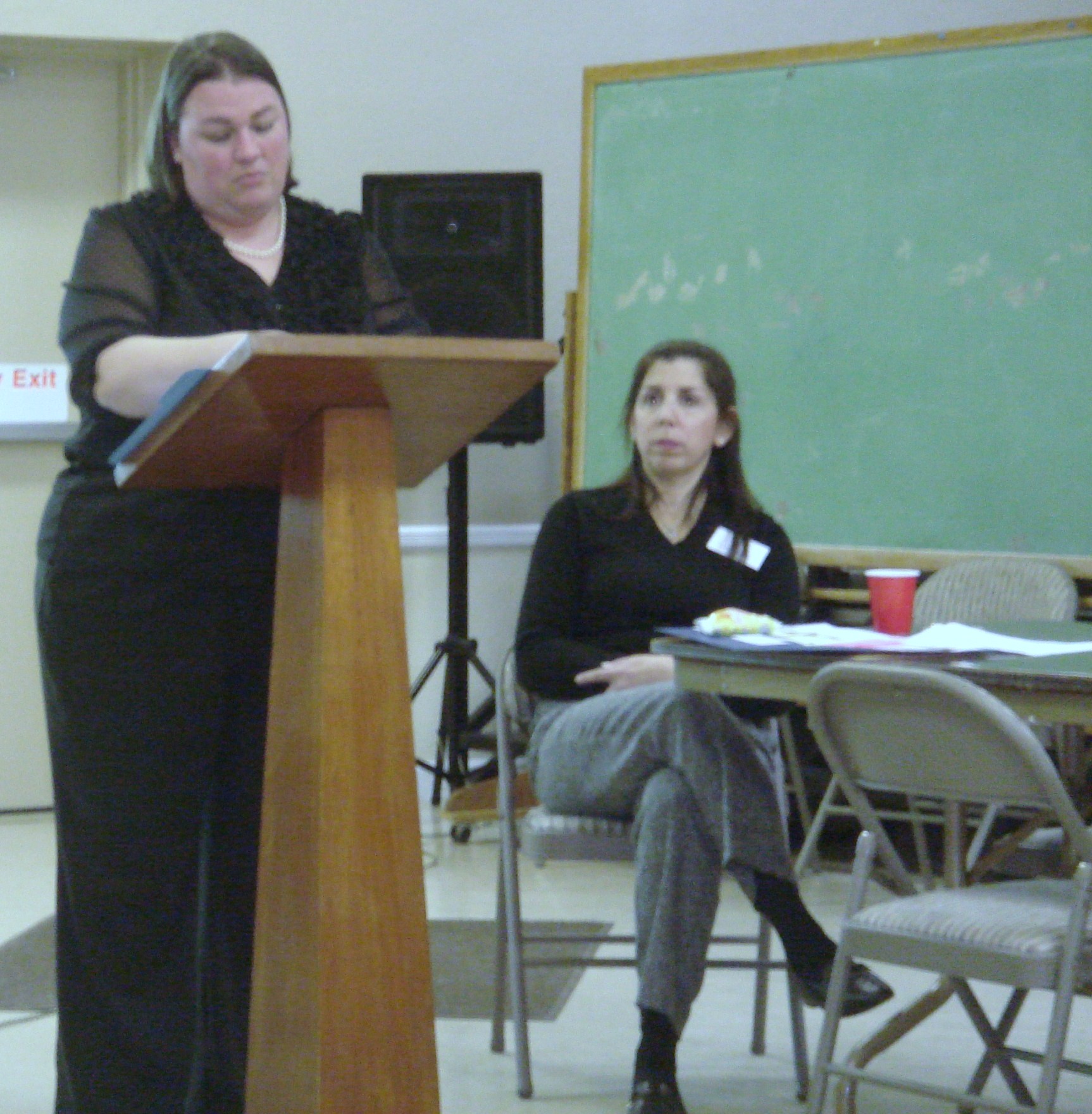
St. Joseph's Day ShrineHe was humble, a good father, the “perfect husband” —  and Saint Joseph is also the patron saint for one of the area’s largest Roman Catholic Churches. …

In the short homily, [Rev. John] Bambrick said St. Joseph is the patron saint of the whole Catholic church and is particularly beloved among Italians. He joked that his Italian mother and his Irish father tussle over who is the greatest saint, Joseph or Patrick.

Images of St. Joseph can be found beside those of the Virgin Mary in Catholic Churches throughout the world, Bambrick said, even though Joseph never speaks in the gospel narratives and disappears early in their stories.

“A lot of women would say he is the perfect husband,” Bambrick joked in regard to Joseph’s silence in the scripture. He said he is often depicted with a staff and lilies to symbolize his virtue and purity as a model husband and father. …

To learn more about this Holy Day of Obligation everywhere but the United States, go to Toms River Patch.
One Church Said Yes to Perinatal Wellness @NJShorePatch

Rachel McKibben’s experience with Postpartum Psychosis inspired her to accept help on behalf of others.

Regional Perinatal Consortium of Monmouth and Ocean Counties (RPCMOC) health educator Amy Goldberg mailed 600 fliers to local religious organizations offering her program on pregnancy related emotional wellness.

One person responded.

That person was Rachel McKibben, director of youth and family ministries at Trinity Episcopal Church in Red Bank. For McKibben, the flier didn’t just represent another ministry opportunity; it was a highly personal invitation to do something about an issue that has shaped her own life.

McKibben is one of a tiny percentage of women who have experienced Postpartum Psychosis.  Although she had no history of mental illness and no symptoms after her first pregnancy, she did have some risk factors for Postpartum Depression (PPD)….

To find out how Rachel dealt with this terrifying experience, and what the signs, symptoms, and solutions are for PPD, go here, or here, or here, or one of the other Jersey Shore Patch.com sites.

When Tragedies Are too Big to Absorb, How Do We Find and Give Comfort? @TheHuffingtonPost

I wonder if any of us is really capable of handling the scope of sorrow that technology now exposes us to.

On Friday, as the world was rightly absorbed with the epic tragedy in Japan, I was reporting on a local tragedy for Patch.com. A young man, Matthew C. Blum, 32, of Forked River, New Jersey, had collapsed and died after leaving a recreational hockey game because he didn’t feel well.

Blum was married just four months ago and his wife learned two weeks ago that she is expecting their first baby. A season of celebration was inexplicably shattered for this family.

As I sat next to Blum’s young, pregnant widow in the living room of her in-laws’ house absorbing one family’s grief, I was incapable of absorbing anything more epic than that.

I felt this way after the Haiti earthquake last year, only the reason was more personal. Still mourning the death of my son in 2008, I was incapable of taking in any more sorrow. My personal grief has, to some degree, emotionally disconnected me from global tragedies.

I wonder though if any of us is really capable of handling the scope of sorrow that technology now exposes us to. Famine, earthquake, tsunami, terrorism, genocide: it’s enough to tempt one to believe end times prophets have a point. …

Read the rest here.

Lessons from Elite Leaders: A Theology of Power for the Workplace, Part 6 of 8 @TheHighCalling

How can powerful leaders be effective and responsible?

In a 2009 Journal of Religious Leadership article, Laity Leadership Senior Fellow D. Michael Lindsay wrote that evangelicals populate halls of power, but generally “have no theological framework for managing the privileges that accompany the mantle of public leadership.” He then outlined a theology of power that can help us consider how to wield power effectively and responsibly.

“Christians in public leadership would be wise to pursue their lives in ways different from the dominant culture, especially in terms of their consumption practices and workplace politics,” he said. Lindsay drew this conclusion after analyzing anecdotal evidence that suggests “whatever suspicions non-religious colleagues may have of these Christians emerge not from hostility toward the teachings of Jesus but from the lifestyles of those who claim to be his followers.”

For example, two business leaders, MCI WorldCom CEO Bernard Ebbers and Enron Corporation CEO Kenneth Lay, have been depicted as notoriously corrupt. Yet both were active in their churches. Conversely, when Tyco International needed to “renew its commitment to ethics, it hired Eric Pillmore as senior vice president of corporate governance. Obviously, Pillmore’s faith and work is the public witness we want to emulate. But how do we ground such a witness theologically?

Find out the answer to that question here.

Lessons from Elite Leaders: Speaking in Different Registers at Work, Part 5 of 8 @TheHighCalling

People are afraid of evangelicals. Why? Laity Leadership Senior Fellow D. Michael Lindsay says his latest research shows that those outside the evangelical fold have fears about evangelicals based on two things:

  1. They’re afraid evangelicals won’t do the  things they say they’ll do.
  2. They’re afraid evangelicals will do some of the things they say they’ll do.

For example, people don’t believe it when an evangelical leader says, “I draw on my faith; it gives me a sense of meaning and purpose; it sacrilizes my work and helps me face some of the challenges that come my way, but I’m not here to convert you or force faith down your throat, or manipulate the work place so that it becomes like a church.”

Likewise, if they’re asked a generic question like, “Do you think evangelicals are trying to take over the country?” they may say yes. But when they’re asked about particular evangelicals they have encountered in leadership, they generally express positive attitudes. The exception is in the political realm, where Lindsay finds significant polarization. He says, “I bracket that off because I don’t know how, as a social analyst, to separate out someone’s faith from their politics. I think so much of how we respond relates to how those things work hand in hand in the political sector.”

He says we need to learn how to “speak in different registers” at work in order to alleviate these fears. …

To find out what he means, read the whole article at The High Calling.

Jersey Shore Churches Preparing for a Celebration @NJShorePatch


Long before MTV popularized a negative caricature of the Jersey Shore with its Seaside Heights reality show, a fourth grade teacher from Belford was worried about what kind of community his three young children would grow up in.

Robert Talmage took that worry and turned it into a lament that he emailed to the Billy Graham Evangelistic Association (BGEA). He really didn’t expect a response.

“I was more opining than I was anything else,” Talmage said with a laugh. “It’s just funny how one thing led to the next. They actually got back to me.” …

To find out how a BGEA event comes to fruition and for details about how you and your church can participate, go to NJ Shore Patch.

Lessons from Elite Leaders: Faith Postures in the Workplace, Part 4 of 8 @TheHighCalling

Whether a leader takes a pragmatic, heroic, circumspect, or brazen approach in the workplace, there are risks and benefits to be considered. Laity Leadership Senior Fellow D. Michael Lindsay identifies these four faith postures that leaders take at work and says none of them is necessarily better than the others, but each presents different challenges and opportunities for leaders who seek to be faithful in their calling.

Ninety-three percent of the leaders that Lindsay interviewed for his new PLATINUM Study said their coworkers know about their faith, but many of them take a pragmatic approach to expressing it in hostile work environments. In “Accounting by Faith,” a 2010 article published in the Journal of the American Academy of Religion, Lindsay and co-author Bradley Smith wrote, “Pragmatic elites prefer a strategy of incremental witness to all-or-nothing conversion campaigns.” …

Go to The High Calling to find out how Sherron Watkins’ faith informed her Enron whistleblowing, how a That 70s show producer feels about his work, what it doesn’t cost an NFL player to be a bold witness, and more from prominent Christians living out their faith at work.

Who knew the Ivy League gem offered a wealth of free public religion events?

As a girl growing up in Point Pleasant Beach, I didn’t give much thought to Princeton University. It was the 1970s and I was, shall we say, distracted. If I thought about our state’s Ivy League jewel at all, I saw it as an inaccessable, dusty treasure chest full of academic stuffiness and snobbery.

If we’re lucky, we grow up and find out the world’s gems are much more accessable than we ever imagined. What a delight it was then, a few years ago, to learn that Princeton has a thriving faith community and offers a bounty of free public religion events.

It’s a pleasant 45 minute drive west on Route 33 and across Route 1 to the university from coastal Monmouth County and a great way to spend an afternoon or evening while enriching one’s understanding of the religious landscape. …

Read about some upcoming events here. Plus, where to park, eat, and shop in Princeton.

Who Gets the Money? @UrbanFaith

Are Christian donors less likely to write checks to minority-run ministries? Anecdotal evidence from the world of nonprofit fundraising suggests there’s a race-based disparity in giving.

Trust is vital to any relationship, but when it comes to funding African American-led urban ministries, it can mean the difference between success and failure. At least that is what Urban Faith heard from several notable leaders who identified lack of trust as a key factor in race-based funding disparities.

Brian Jenkins is director of Entrenuity, a ministry that helps urban youth start their own businesses. Although the organization has been featured on public television and has trained more than 700 adults and 4,000 youth since 1993, Jenkins says, “What I have found is that when it comes to people saying ‘we’re brothers and sisters in Christ,’ that’s fine, but when it comes to supporting my work and me as a minister in Christ, that’s where the breakdown occurs.” …

Read what Jenkins (and four other leaders) had to say about this important topic at Urban Faith.

Lessons from Elite Leaders: Bearing Witness at Work through Generosity, Part 3 of 8 @TheHighCalling

People of faith are called to use their influence and power to work toward the common good. Laity Leadership Institute Senior Fellow D. Michael Lindsay says his new PLATINUM Study on elite leaders tells an important story about how leaders can work toward the common good through workplace generosity.

The story of David Grizzle, Chief Counsel for the Federal Aviation Administration (FAA), stood out to Lindsay from his interviews of some 500 leaders. Grizzle had a long career at Continental Airlines, retiring in 2008 as senior vice president of customer experience. (The High Calling interviewed Grizzle in 2006.)

In the late 1990s, Grizzle brokered a landmark marketing deal between Continental and Northwest Airlines that transformed the industry, according to Lindsay. Continental and Northwest sold seats on each other’s airplanes and shared reciprocal agreements in their frequent flyer programs that laid the groundwork for the mergers and consolidations that have since become standard in the airline industry. …

Read the whole thing at The High Calling.

Training Elite Athletes with a Jersey Shore Ethos @NJShorePatch

How performance coach Todd Durkin uses hometown lessons to lead elite athletes to victory:

The first time I met superstar performance coach Todd Durkin he was on his bike, slinging a newspaper across my family’s front lawn. Then his sister and I married a couple of Bricktown brothers and we became family. Last week, for the second time in two years, one of Durkin’s clients led a team to victory in the Superbowl.

In an interview with Yahoo! Sports this week, Green Bay Packers quarterback Aaron Rodgers talked about what a tough and effective trainer Durkin is. In the forward to Durkin’s new book,The Impact! Body Plan, last year’s winning quarterback Drew Brees credits the trainer with helping him grasp the elusive trophy. While Durkin expresses gratitude to these and other professional athletes for helping to make him a success, it’s his family and legendary Brick Dragons football coach Warren Wolf who get top billing in the acknowledgements. …

Read the whole thing here. …

Lessons from Elite Leaders: Mentors, Money, & Personal Devlopment, Part 2 of 8 @TheHighCalling

In part 2 of my series on lessons from elite leaders, I take on the thorny topic of leveraging relationships to one’s own advantage. Here’s a peek:

If you want to be an elite leader, you’ll need mentors, money, and personal development. Building upon research reported in his Pulitzer Prize nominated book, Faith in the Halls of Power: How Evangelicals Joined the American Elite, Laity Leadership Institute Senior Fellow and Rice University sociologist D. Michael Lindsay mined this startling new data about the factors that help elite leaders advance in their careers. In his new PLATINUM Study (PLATINUM stands for Public Leaders in America Today the Inquiry into their Networks, Upbringing, and Motivations), Lindsay reports that mentors, money, and personal development are vital to career growth. …

Find out how at The High Calling. Part 1 on limts, accountability, and marriage is here. Be sure to peruse the comments; there’s some good discussion going on.